
AI-DC KOREA ORIGINAL
Data Center Development
I’m reading them one by one.
This is a 10-panel webtoon that explains electricity, telecommunications, water supply, disaster management, permits and licenses, and project costs based on practical guidelines.Watch Episodes 8–16 in portrait mode →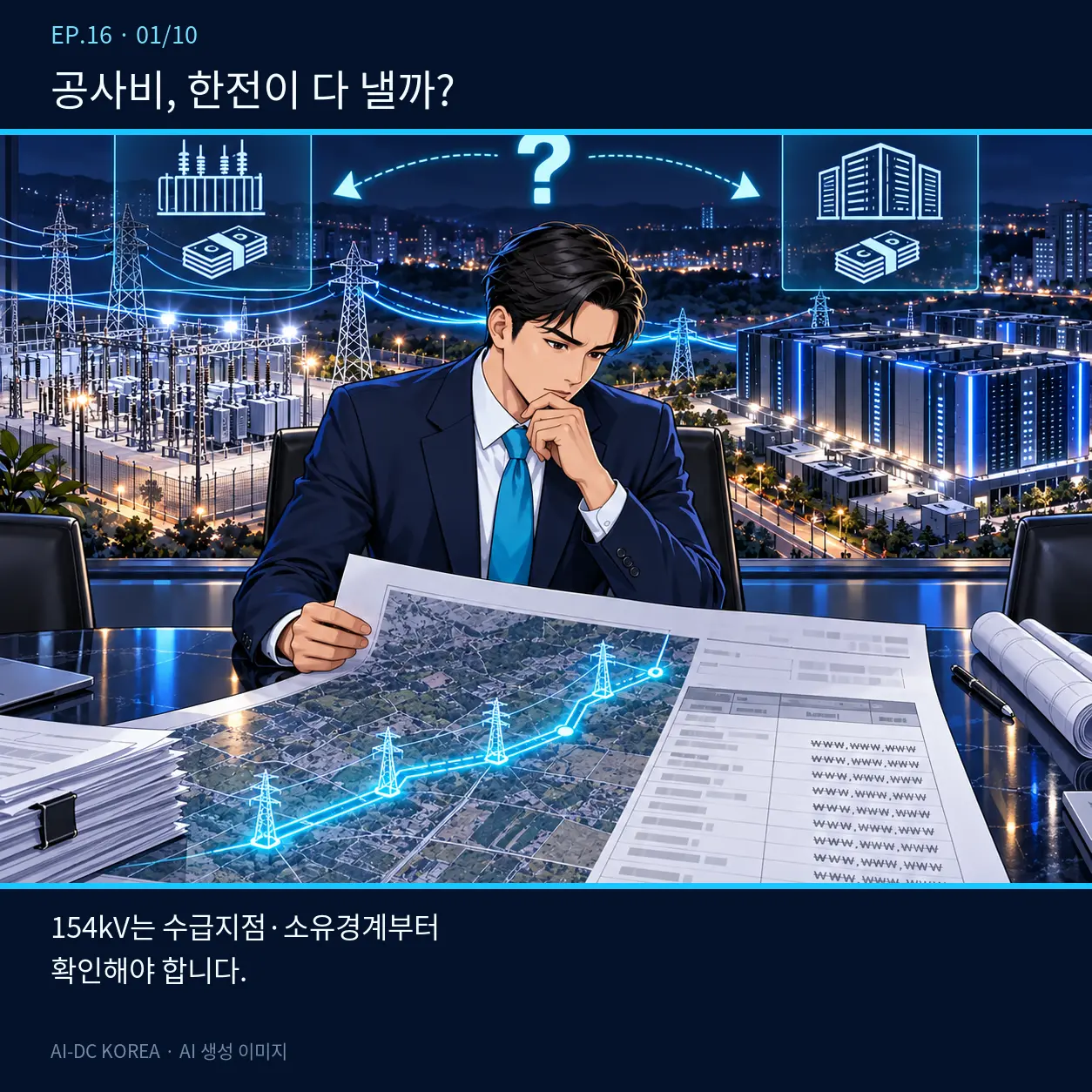
Who Will Cover the Construction Costs for the 154 kV Feeder Line, and to What Extent?
Based on supply and demand points and property boundaries, costs are allocated as follows: KEPCO’s share, facility construction costs, customer direct costs, and land and permitting fees.
Watch Episode 16 →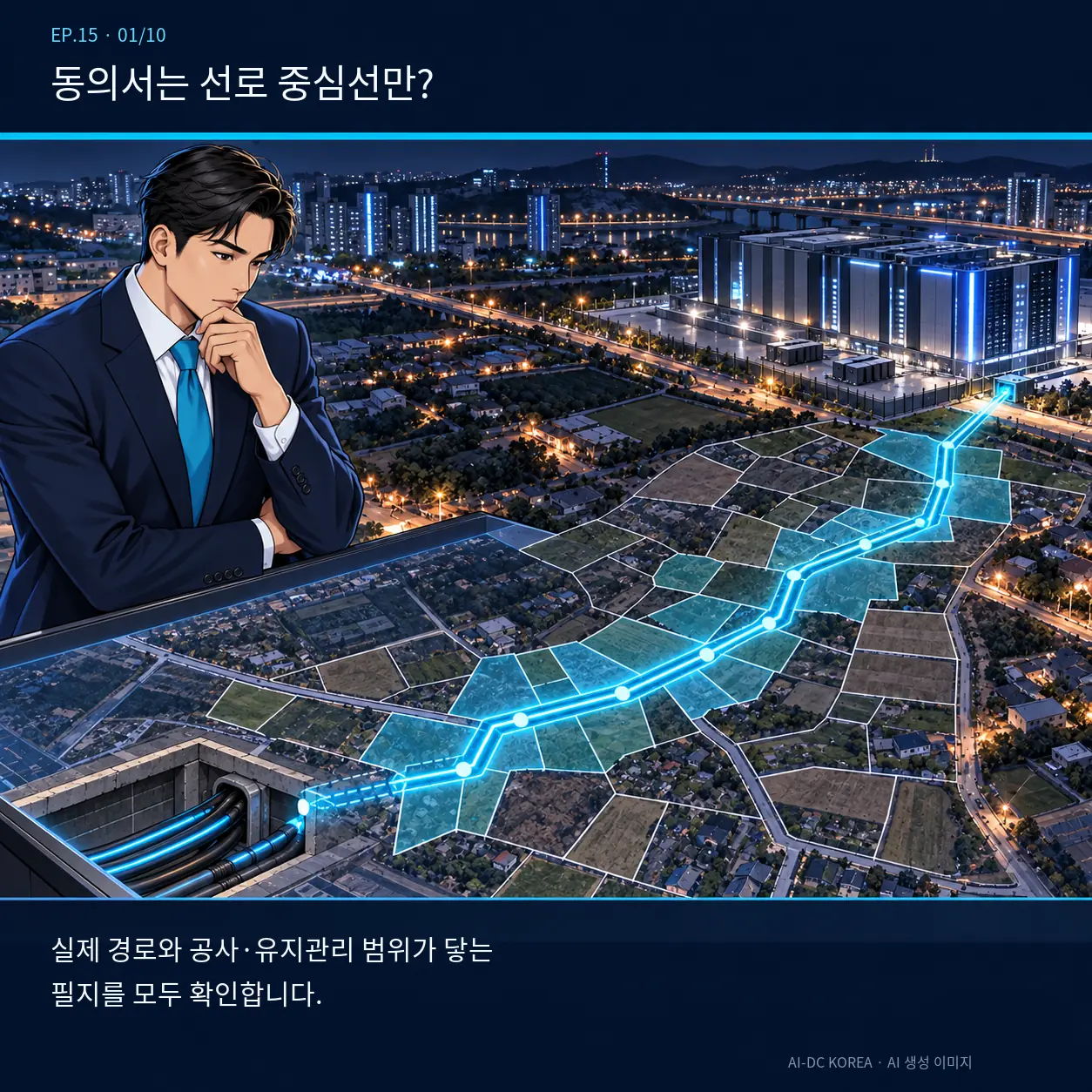
154 kV transmission lines: What is the scope of the land use consent form?
Permits for permanent facilities, maintenance, and temporary construction zones along the actual route, as well as permits for the use of roads and waterways, must be obtained on a lot-by-lot basis.
Watch Episode 15 →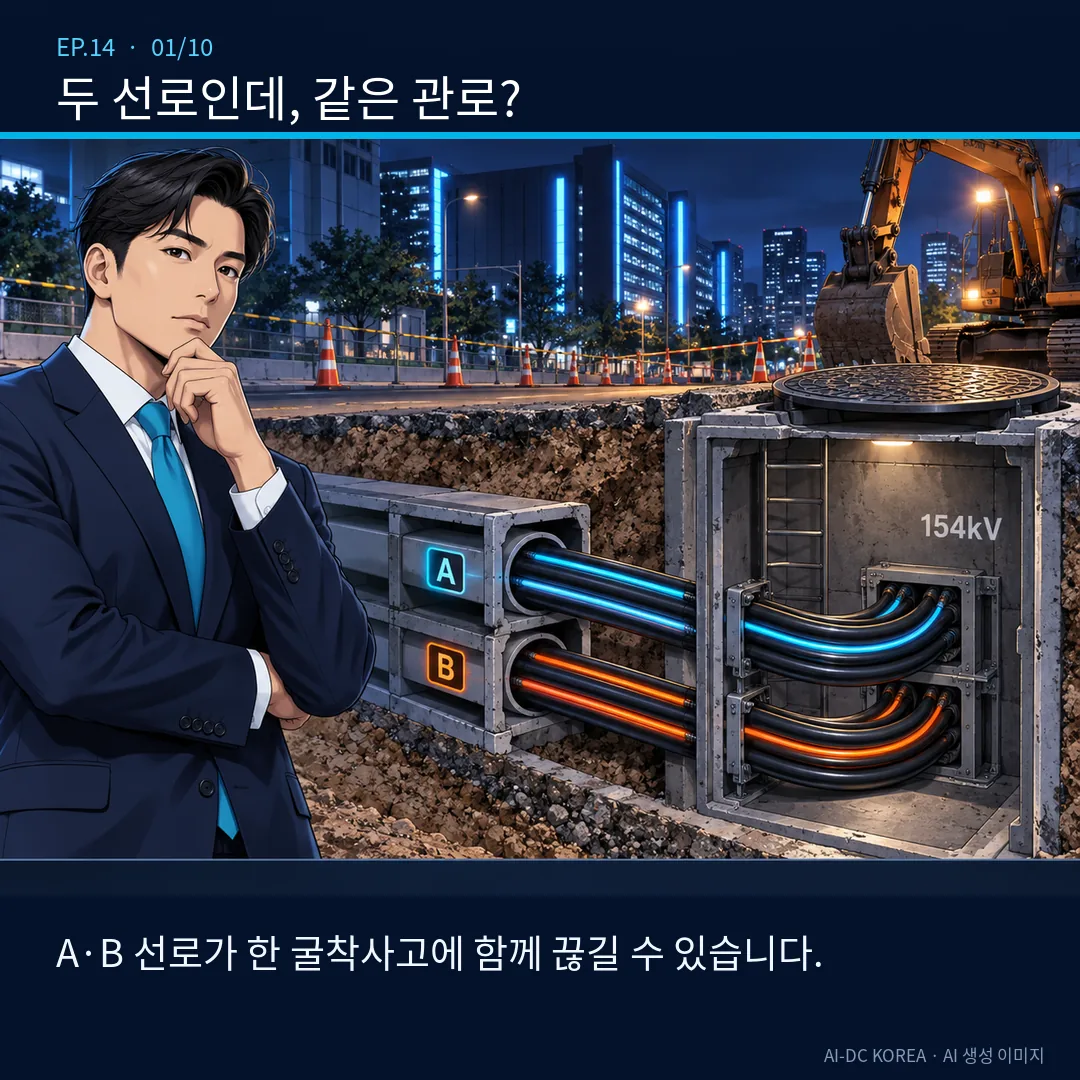
154 kV active and standby lines—are they redundant if they share the same conduit?
Even if the power sources and contracts differ, the risk of a common failure remains if shared utility lines, manholes, bridges, and on-site control power sources are used.
Watch Episode 14 →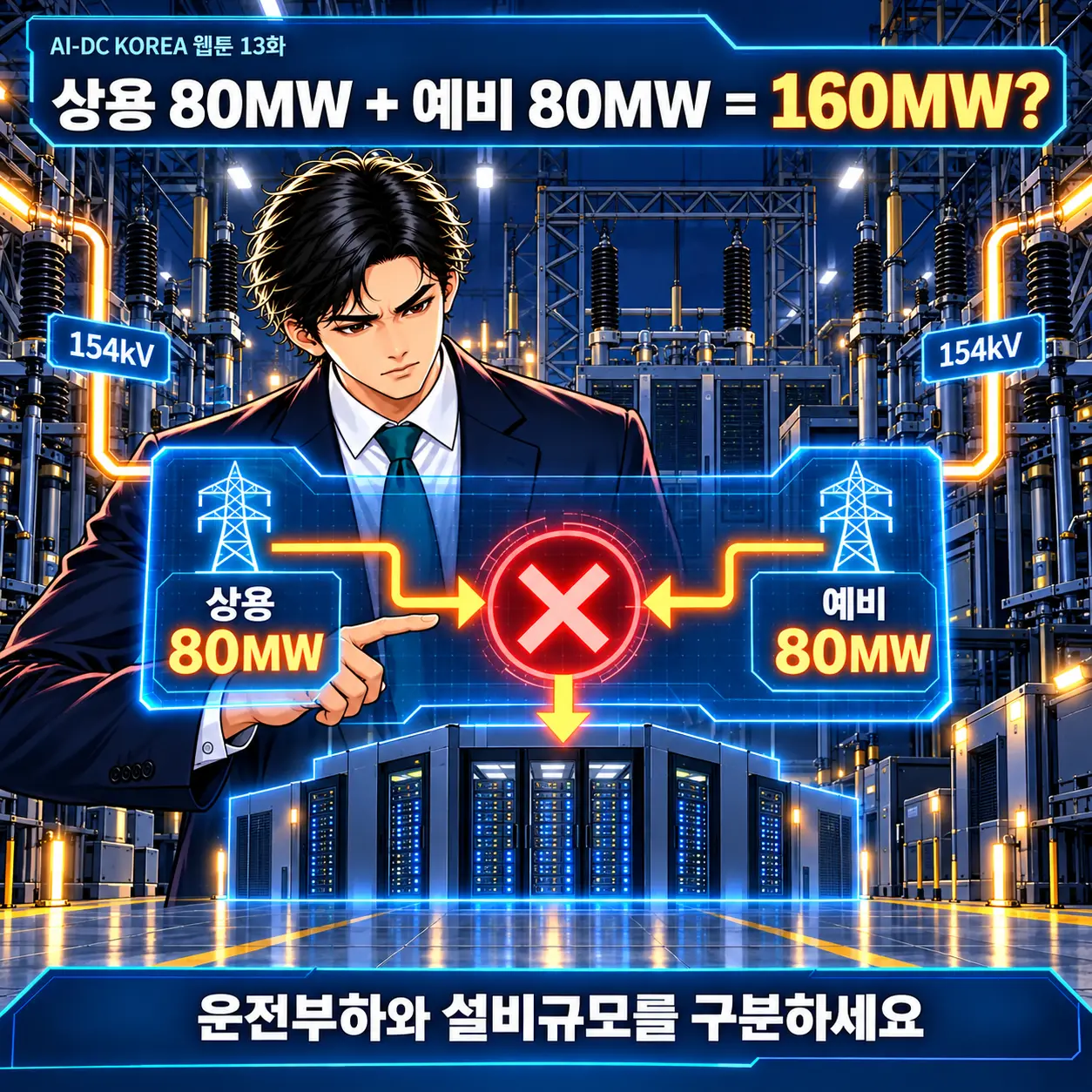
Is it 80 MW of commercial capacity + 80 MW of reserve capacity = 160 MW?
Although the operating load is 80 MW, the applications, line ratings, interlocks, composite metering, and protection coordination for the two supply paths must be reviewed separately.
Watch Episode 13 →
PUE 1.3: How much more power will be needed?
We calculate separately the IT load limit of 80 MW based on a 40 MW IT load converted to a 52 MW facility load, taking into account summer peak demand, design margin, and redundancy.
Watch Episode 12 →
UPS Batteries: Is 5 Minutes Enough?
We verify the actual protected load, generator start-up, disconnection, and restart failures, end-of-life capacity, and the time required for battery redundancy and integration testing.
Watch Episode 11 →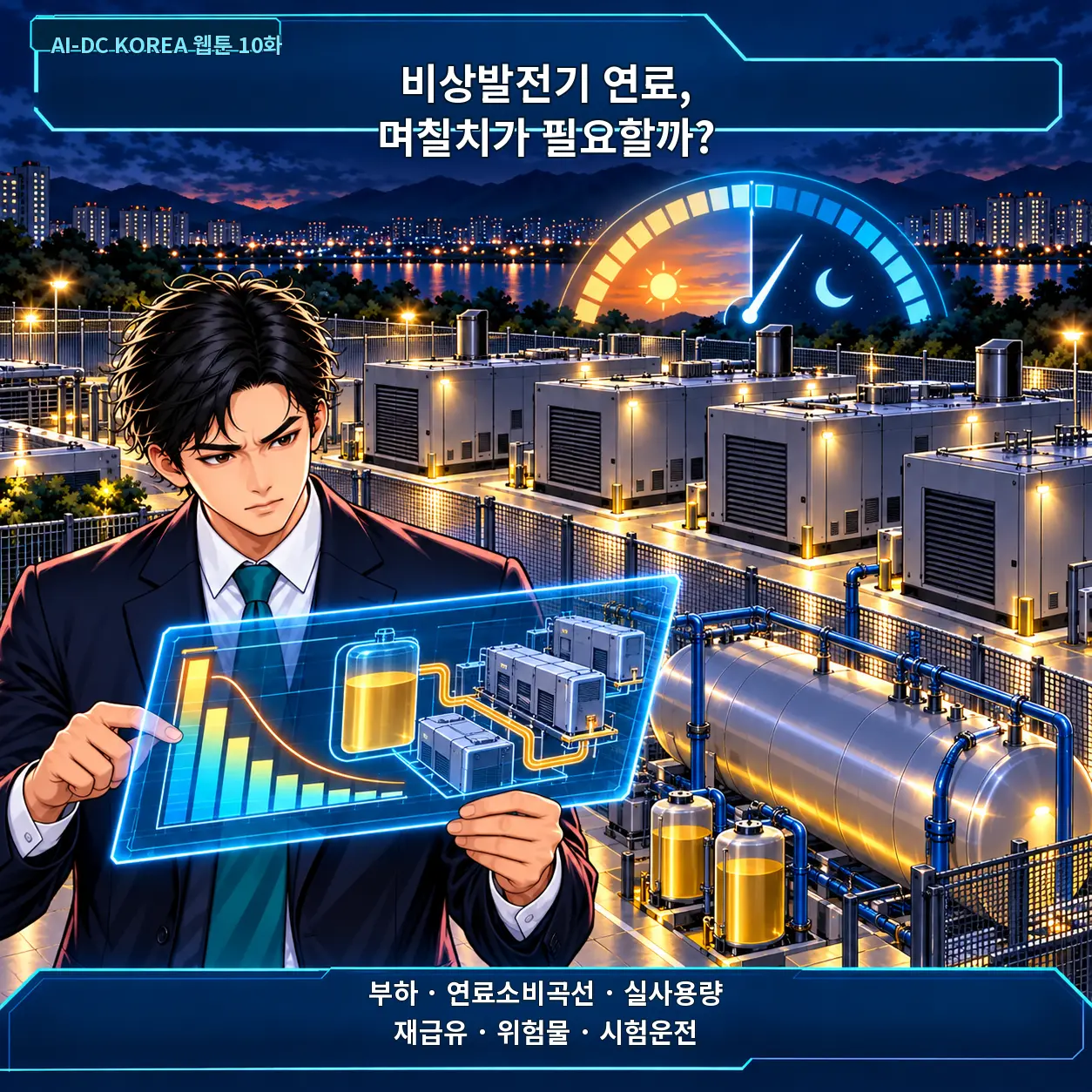
How many days’ worth of fuel is needed for emergency generators?
We calculate the required storage volume based on emergency operating loads, vendor consumption curves, actual tank usage, N+1 fuel systems, and refueling and hazardous materials permits.
Watch Episode 10 →
Data Center Noise: How Many dB at the Site Boundary?
Noise risks are assessed based on the applicable region and time zone, the expected number of noise monitoring points, the log sum of equipment noise, and noise reduction designs and post-construction measurements.
Watch Episode 9 →
Can data center waste heat really be sold for heating?
Feasibility is assessed based on recoverable heat quantity and temperature, concurrent demand in the vicinity, pipeline infrastructure, backup systems, supply contracts, and net economic viability.
Watch Episode 8 →
Is 50 metric tons of water per day enough for a data center?
Actual requirements are calculated based on IT load, cooling methods, WUE, summer peak demand, and water supply and wastewater discharge conditions.
Watch Episode 7 →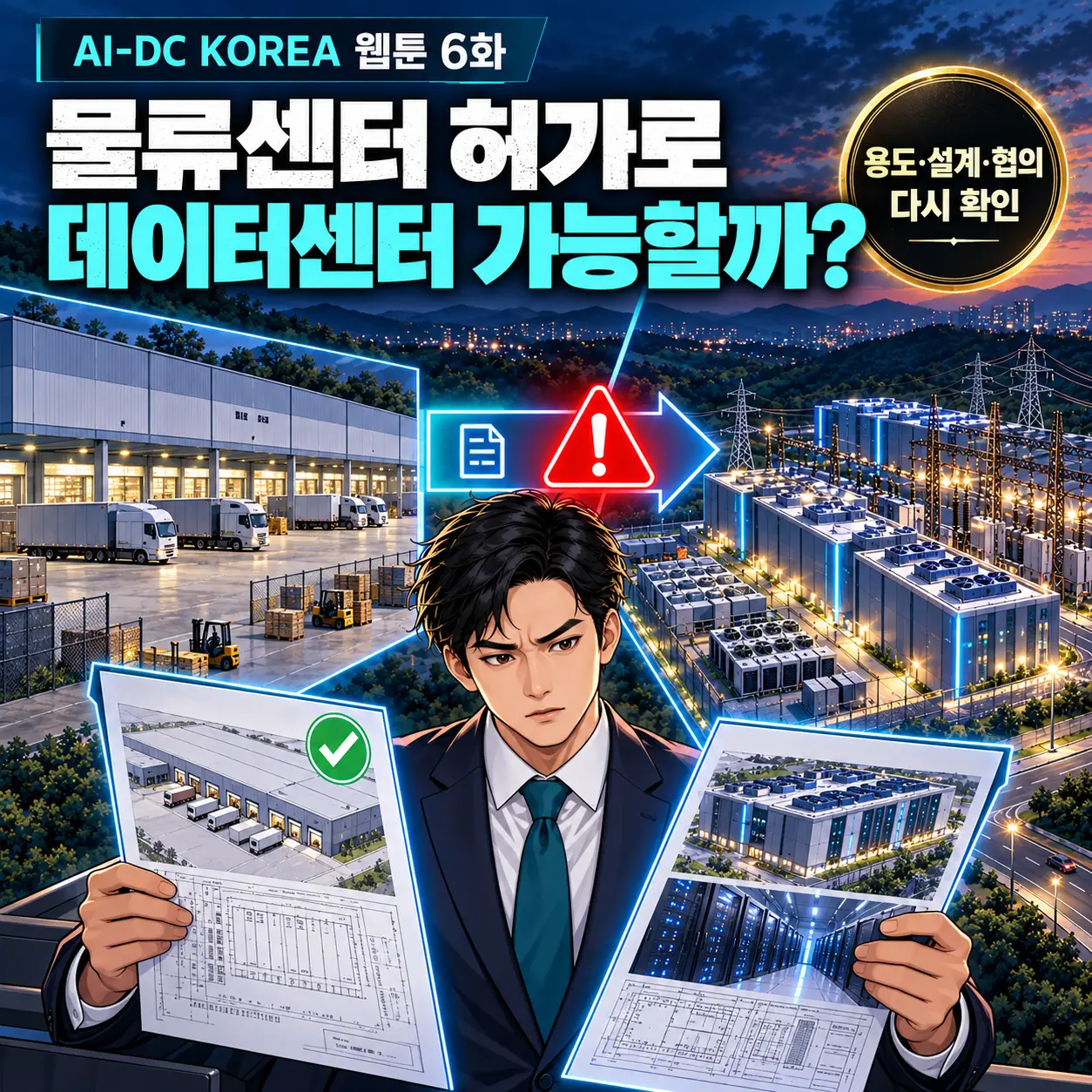
Can a data center be established with a logistics center permit?
We cross-check the building’s intended use, zoning regulations, permitting procedures, and structural, fire safety, electrical, and civil engineering requirements.
Watch Episode 6 →
Data Center Auction Sites: What to Look for Before Bidding?
Before bidding, verify the land use zone, access roads, power supply, disaster, environmental, and water supply considerations, as well as the rights analysis and total development costs.
Watch Episode 5 →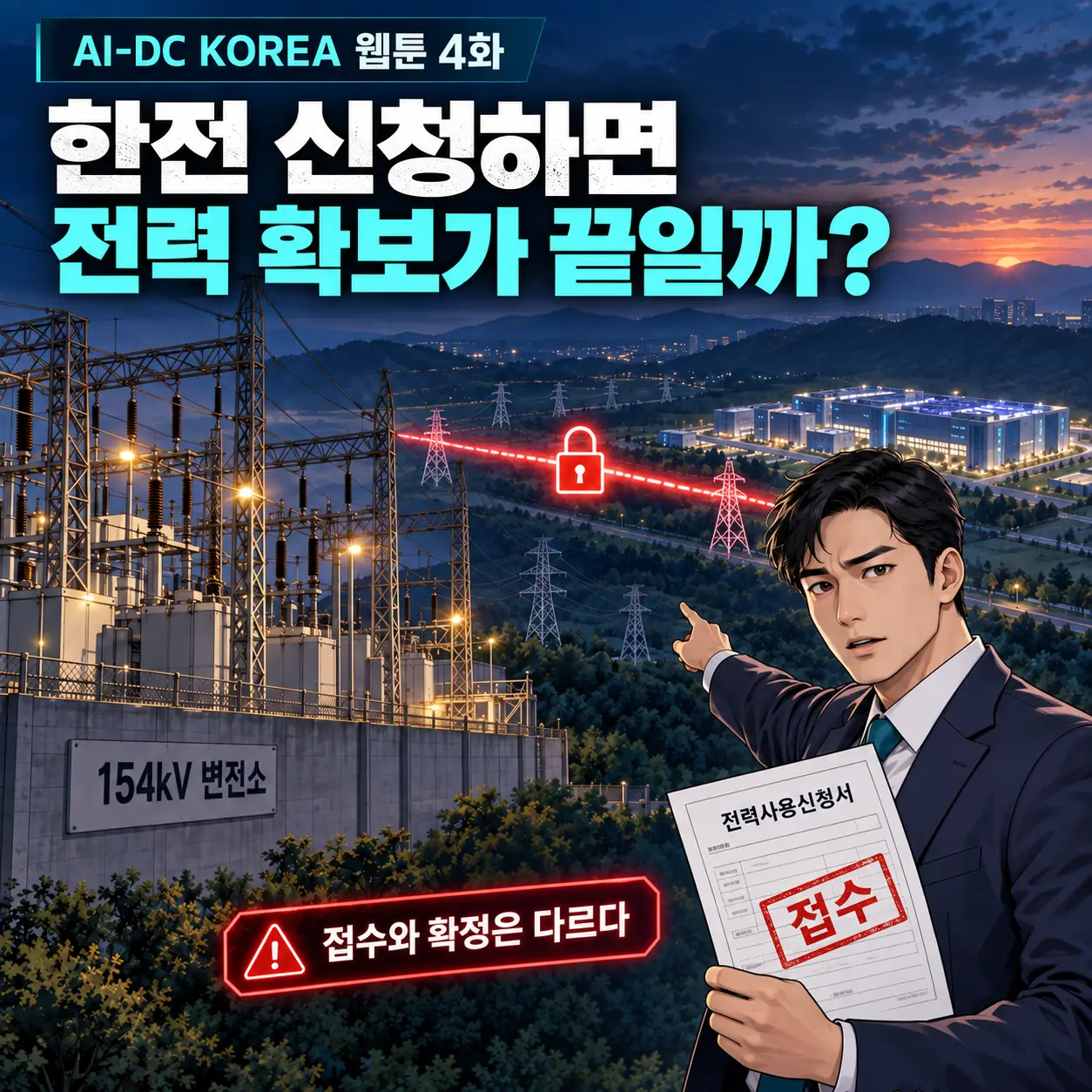
Does applying to KEPCO guarantee a secure power supply?
This guide explains each step of the process, from application submission through technical review to confirmation of the connection point, available capacity, supply start date, and scope of construction.
Watch Episode 4 →
How is the actual 154 kV feed-in path calculated?
Verify the route corridor (not the straight-line distance), obstructions, cable conditions, and agreements regarding right-of-way and excavation, as well as the overall construction schedule.
Watch Episode 3 →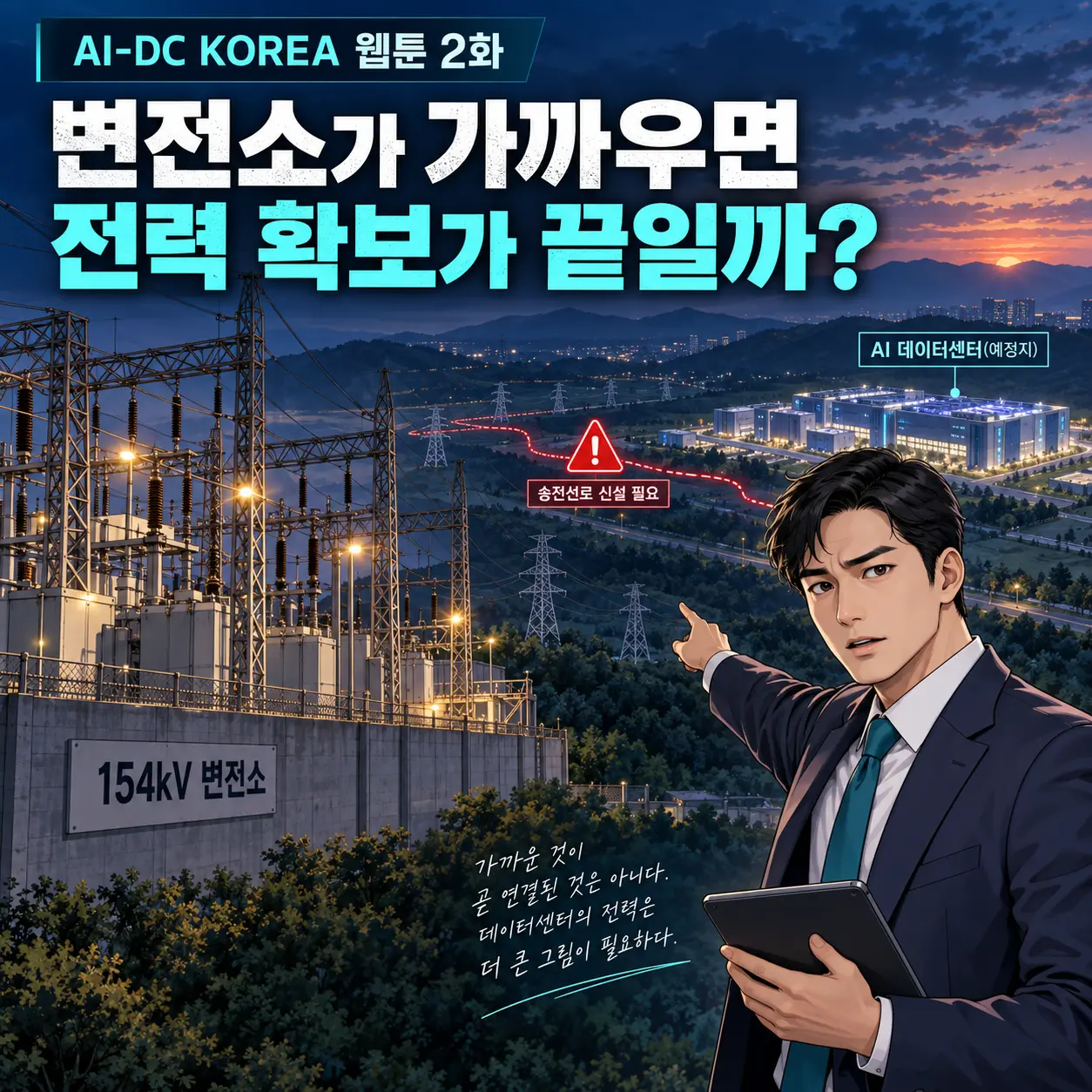
Does having a substation nearby guarantee a stable power supply?
Verify the grid reserve capacity, the target connection date, commercial and reserve power, the actual 154 kV feed-in route, and the status of discussions with KEPCO.
Watch Episode 2 →
Why Power Supply Should Be Considered Before Land Prices When Selecting a Data Center Site
We examine everything from the pitfalls of cheap land to grid reserve capacity, 154 kV feed-in routes, communication redundancy, and total development costs.
Watch Episode 1 →