
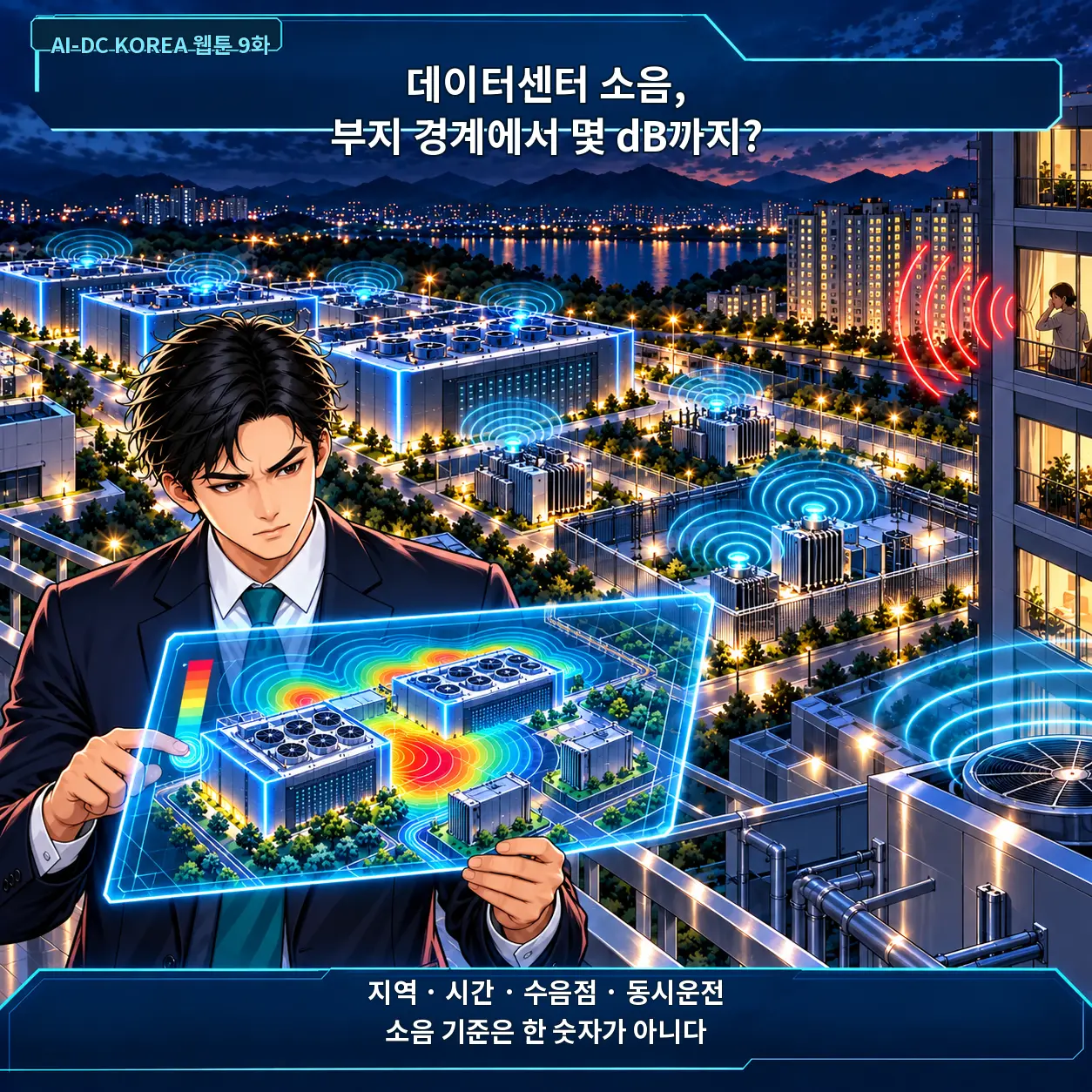
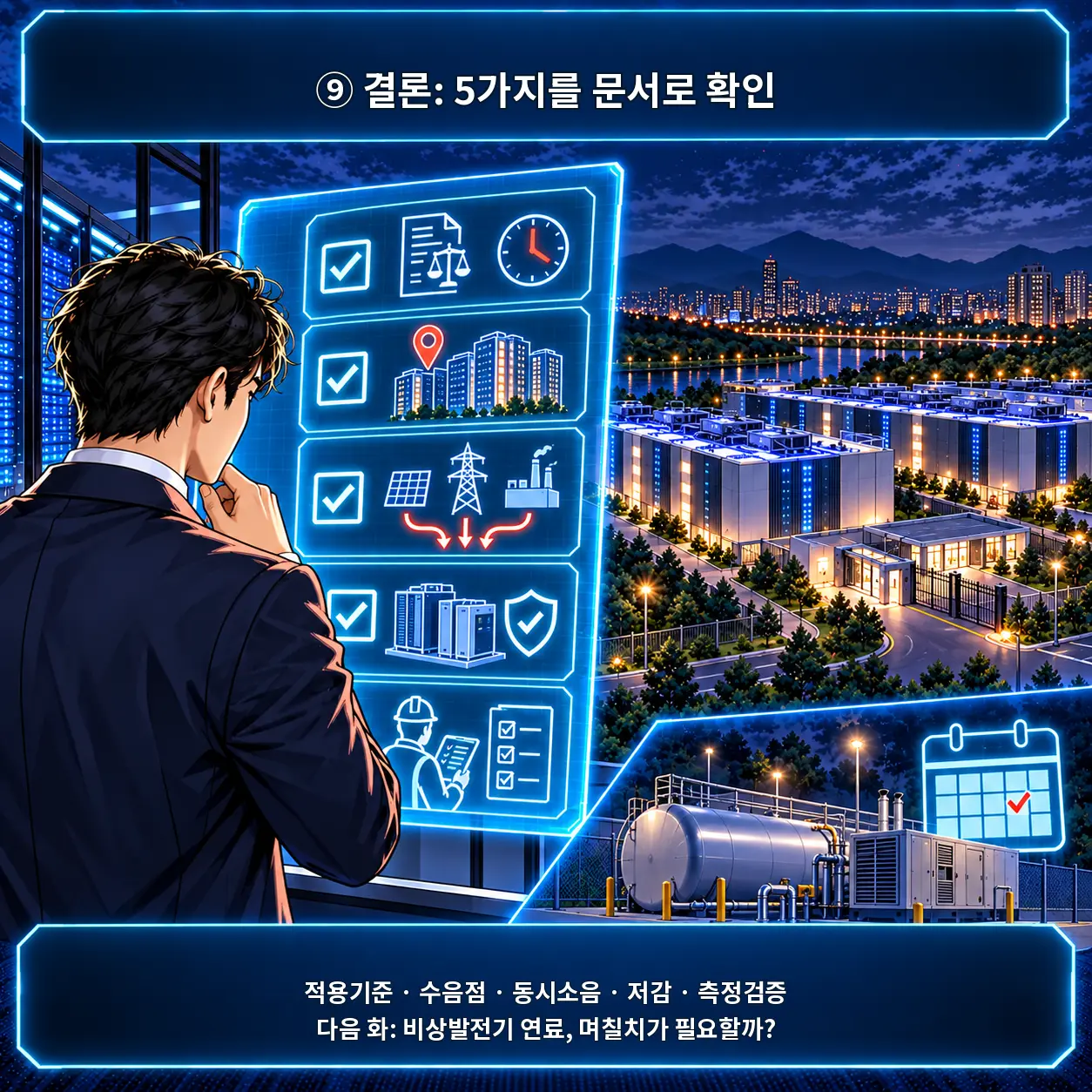
It is dangerous to rely solely on the phrase “45 dB at night.” You must first determine the applicable areas, noise source classifications, time periods, and measurement locations where damage is expected; then, calculate the log sum of the simultaneous noise levels from all equipment; and finally, link this process to noise reduction design and post-construction measurements.
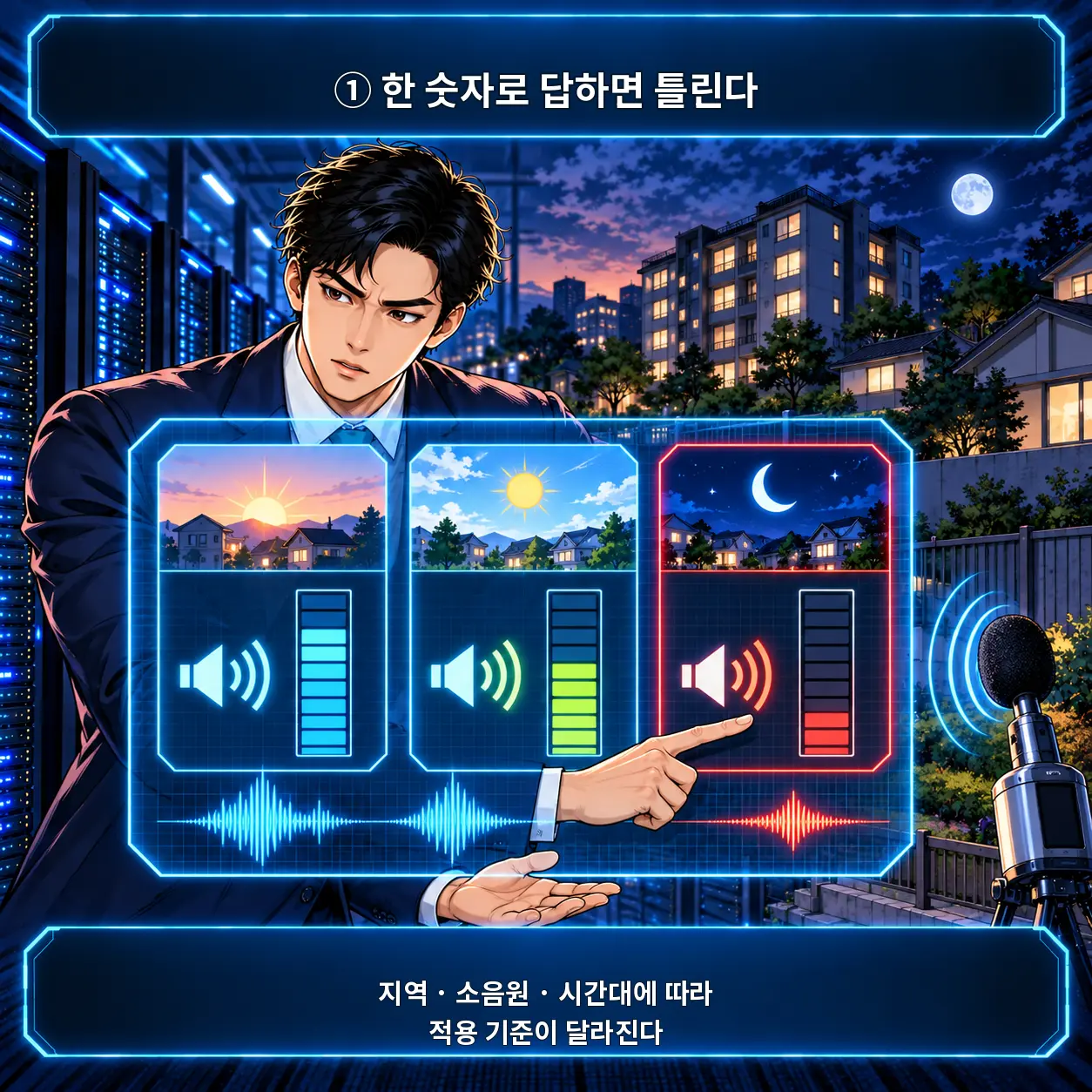
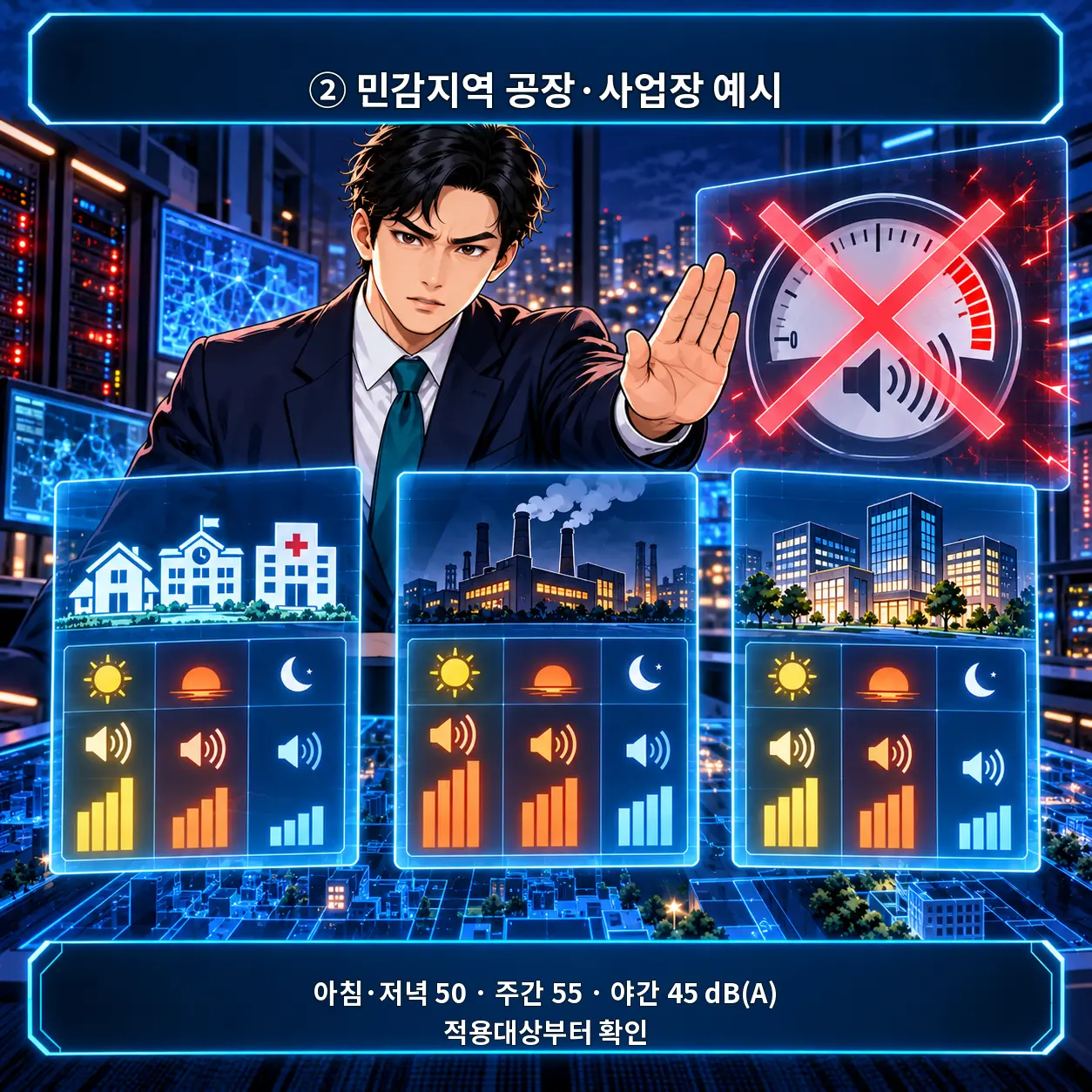
Current noise regulation standards are categorized by area, noise source, and time of day. Examples of how these standards apply to factories, business premises located outside the same building, and other noise sources in residential and greenbelt areas, as well as in sensitive areas such as schools, general hospitals, and public libraries, include: 50 dB(A) in the morning and evening, 55 dB(A) during the day, and 45 dB(A) at nightIf conditions differ—such as in other regions or at business sites within the same building—the values in the table will also change; therefore, you must first confirm the land use zone and the actual noise source classification with the relevant authorities.
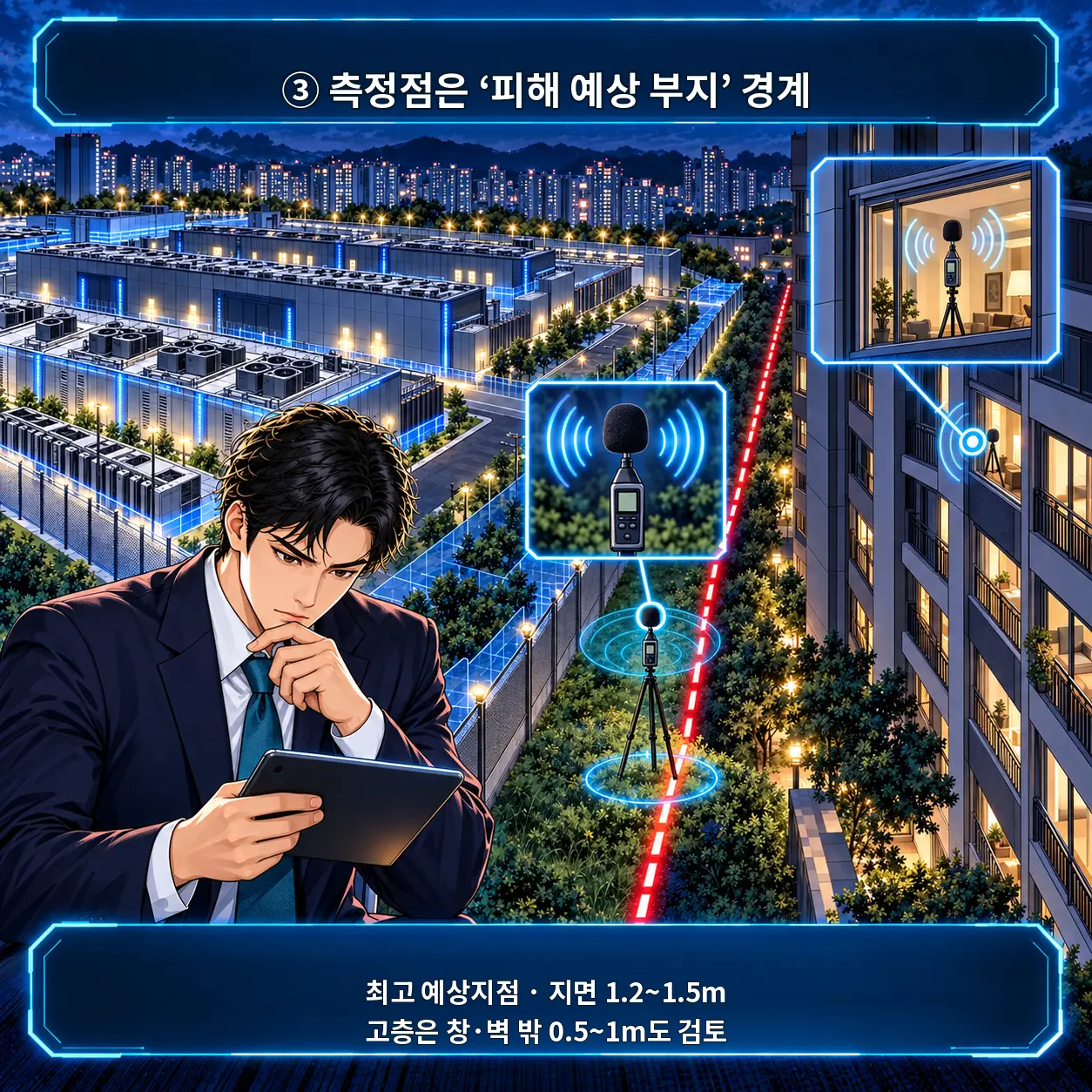
Measurement points should not be fixed simply at the boundaries of the data center operator’s premises. According to the Ministry of Environment’s interpretation of the regulations, outdoor noise measurement points are located at points along the property boundaries of individuals expected to be affected by noise where noise levels are anticipated to be high; in principle, these points are 1.2–1.5 meters above ground level. If higher noise levels are anticipated in buildings with two or more stories, locations 0.5–1 m outside windows, doors, or walls facing the noise source should also be considered.
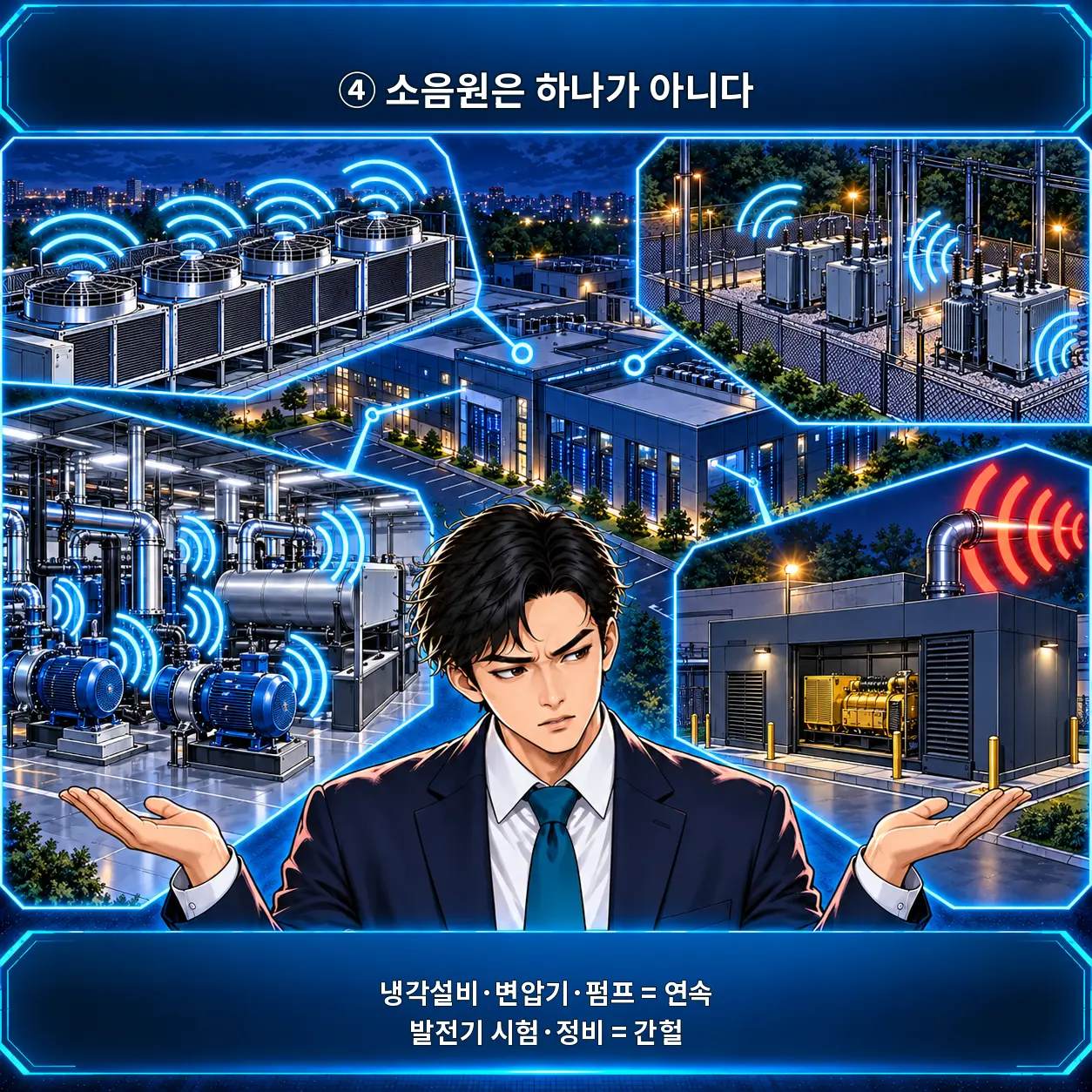
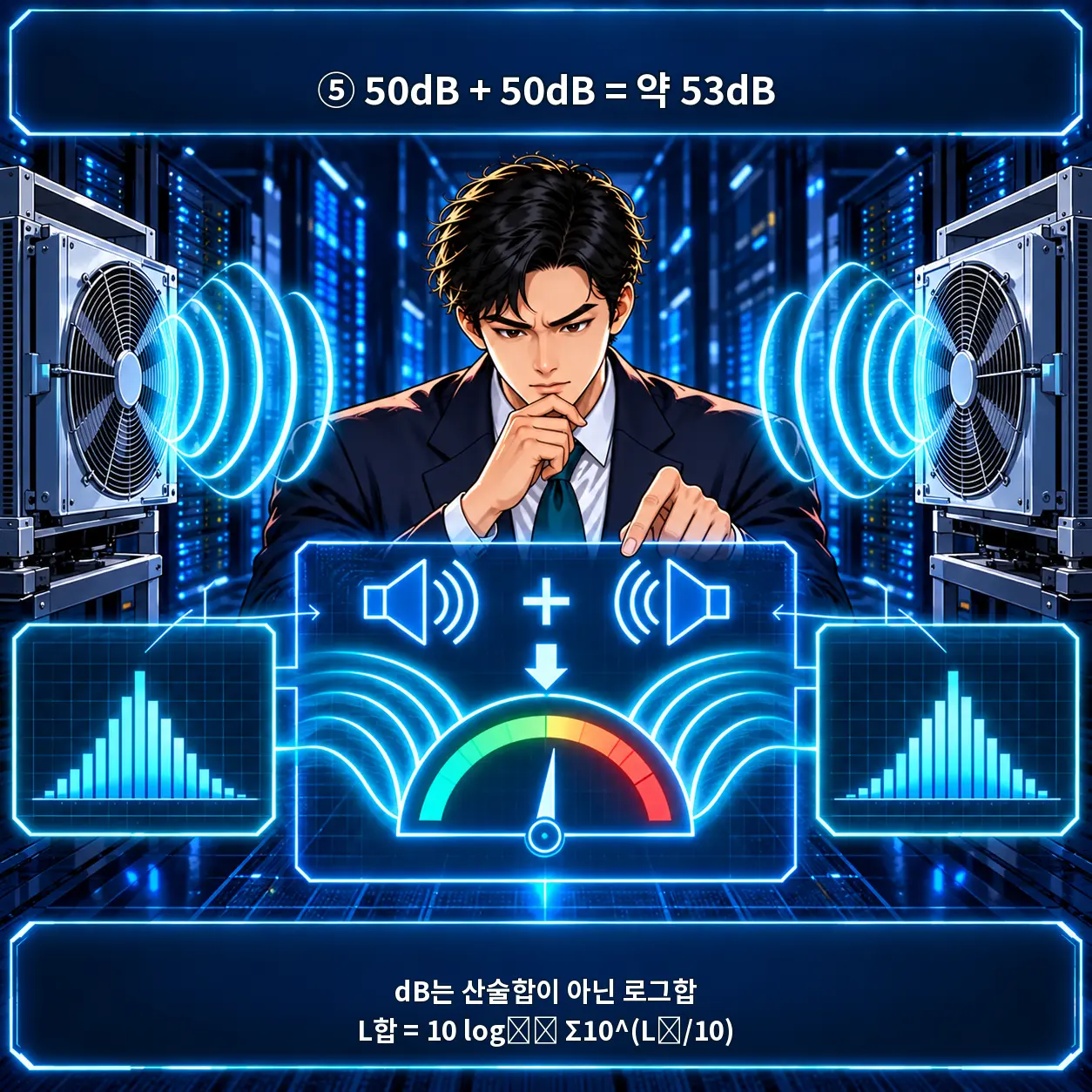
Noise sources are listed separately based on continuous operation (such as cooling towers, dry coolers, chillers, pumps, and transformers) and intermittent operation (such as emergency generator testing and startup). Decibels are not calculated as an arithmetic sum, but rather L-sum = 10 log₁₀ Σ10Lᵢ/10Since these are added together, if two independent 50 dB noise sources operate simultaneously, the result is approximately 53 dB.
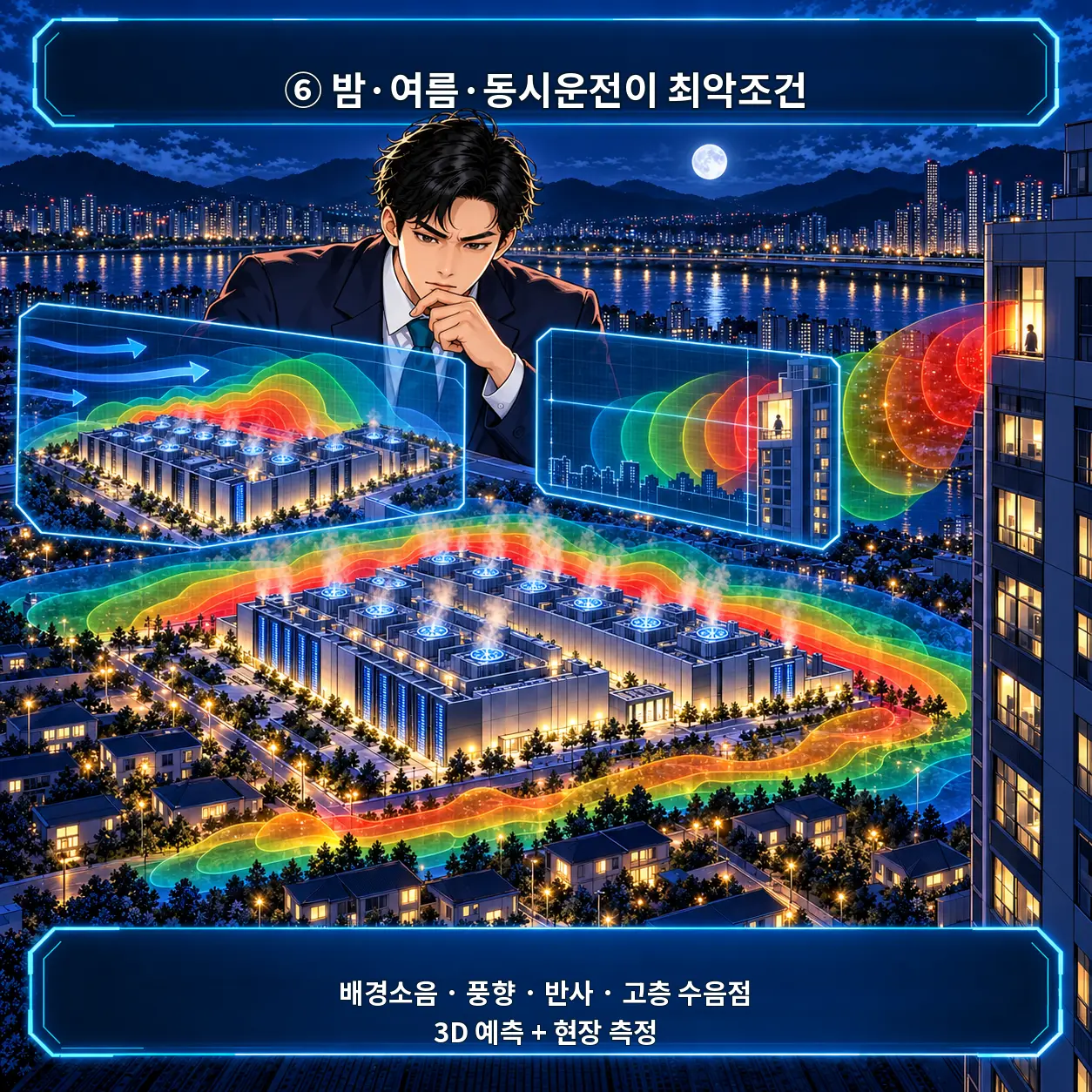
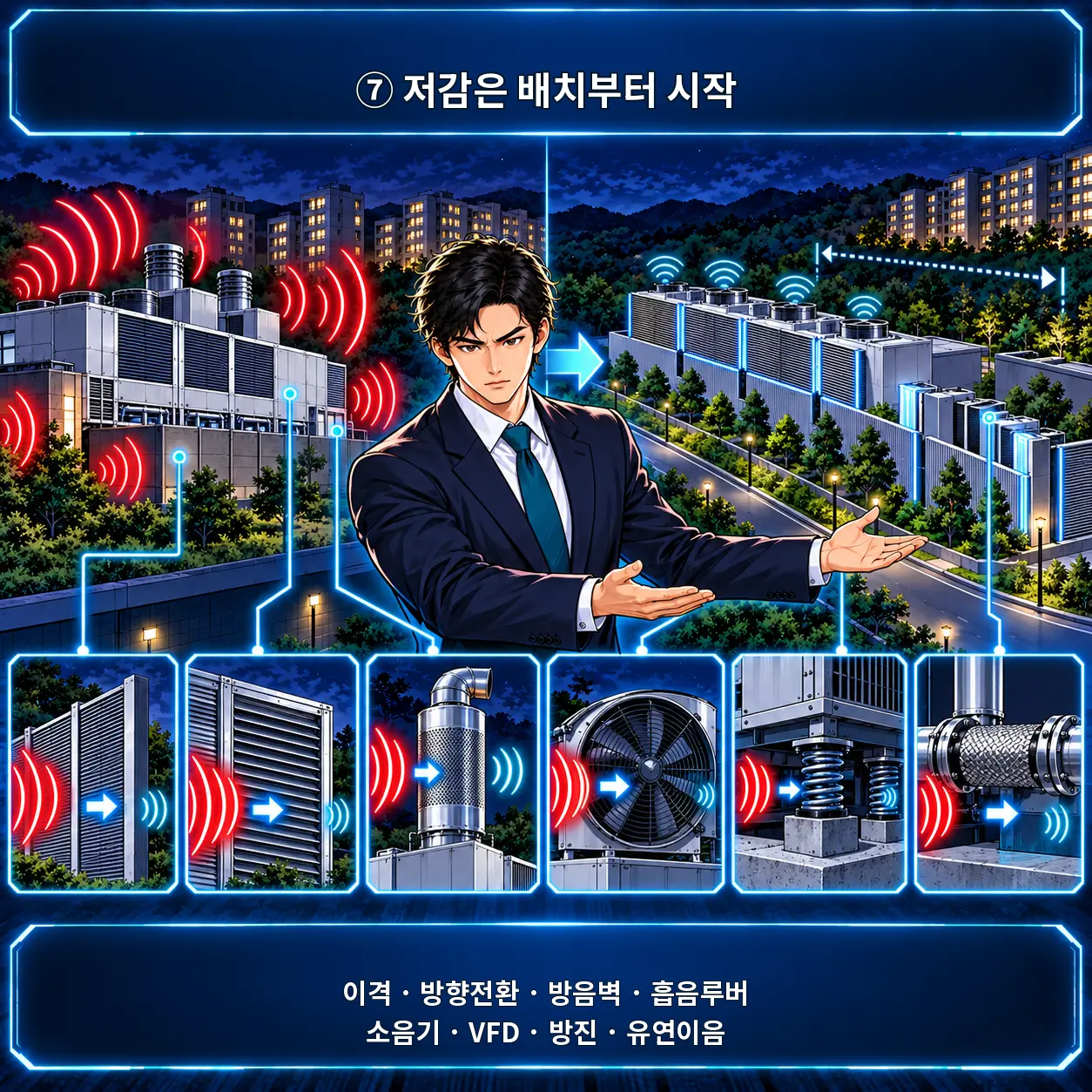
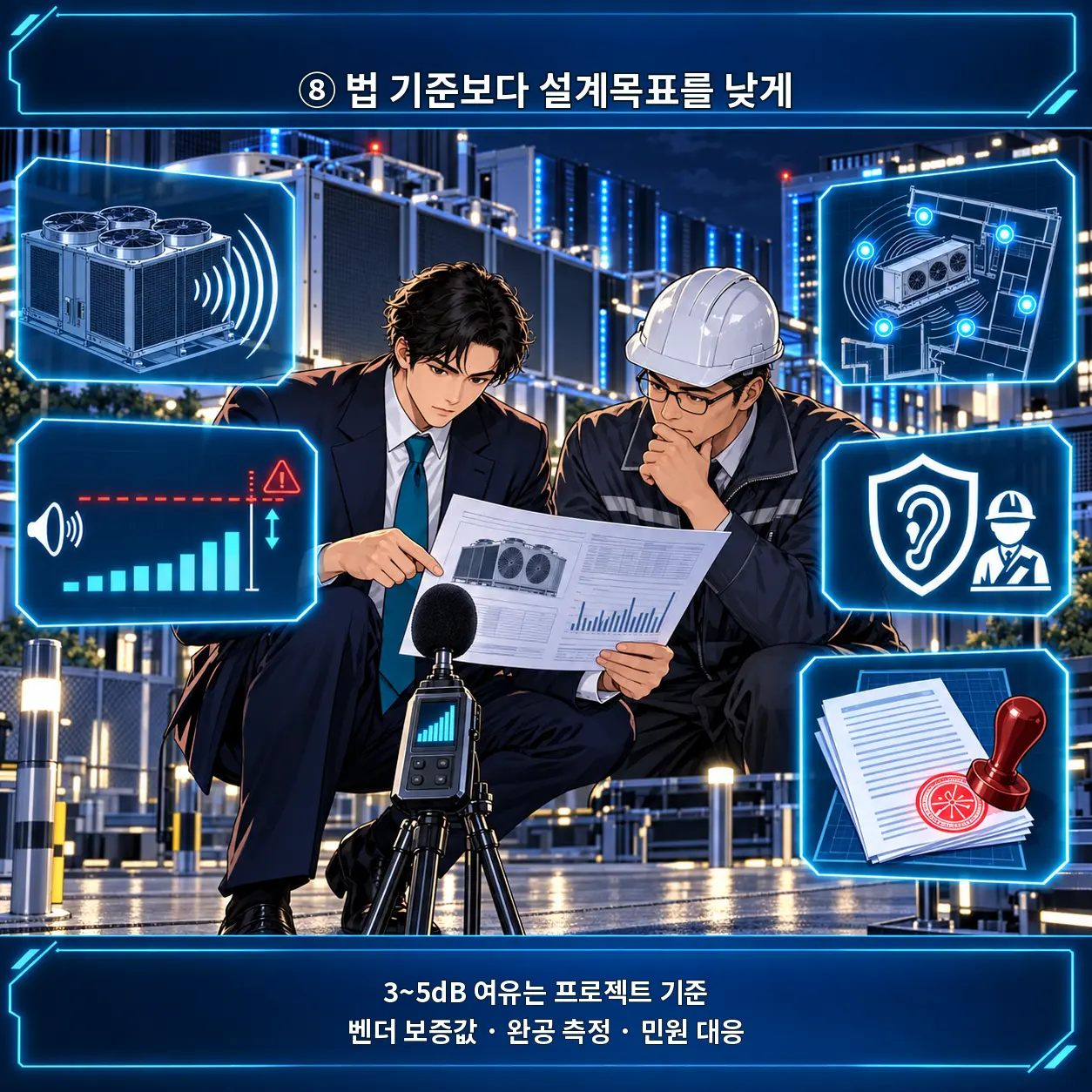
Forecasts account for nighttime, summer peak load, and simultaneous operation conditions, incorporating topography, building shielding and reflection, wind direction, rooftop equipment height, and high-rise sound reception points. Noise reduction measures begin with equipment spacing and orientation and combine sound barriers, sound-absorbing louvers, low-noise fans and VFDs, generator intake and exhaust silencers, dust screens, and flexible joints. An internal target of 3–5 dB below the legal limit is set to account for fluctuations and errors. Project Design MarginThis is not a separate statutory standard.
Prior to signing a contract, document the guaranteed acoustic power or octave-band values for each piece of equipment, simultaneous operation scenarios, prediction models, and responsibility for noise mitigation equipment; verify these by measuring background noise before operation and conducting measurements at boundary and high-rise monitoring points after completion.
※ This content is intended for preliminary review during the early stages of a project. Actual application criteria and measurement and evaluation methods must be finalized based on the latest laws and regulations, consultations with the relevant authorities, licensing conditions, and reviews by specialized noise and vibration agencies.
Start a site analysis that includes noise risks →National Law Information Center: Enforcement Rules of the Noise and Vibration Control Act ↗