
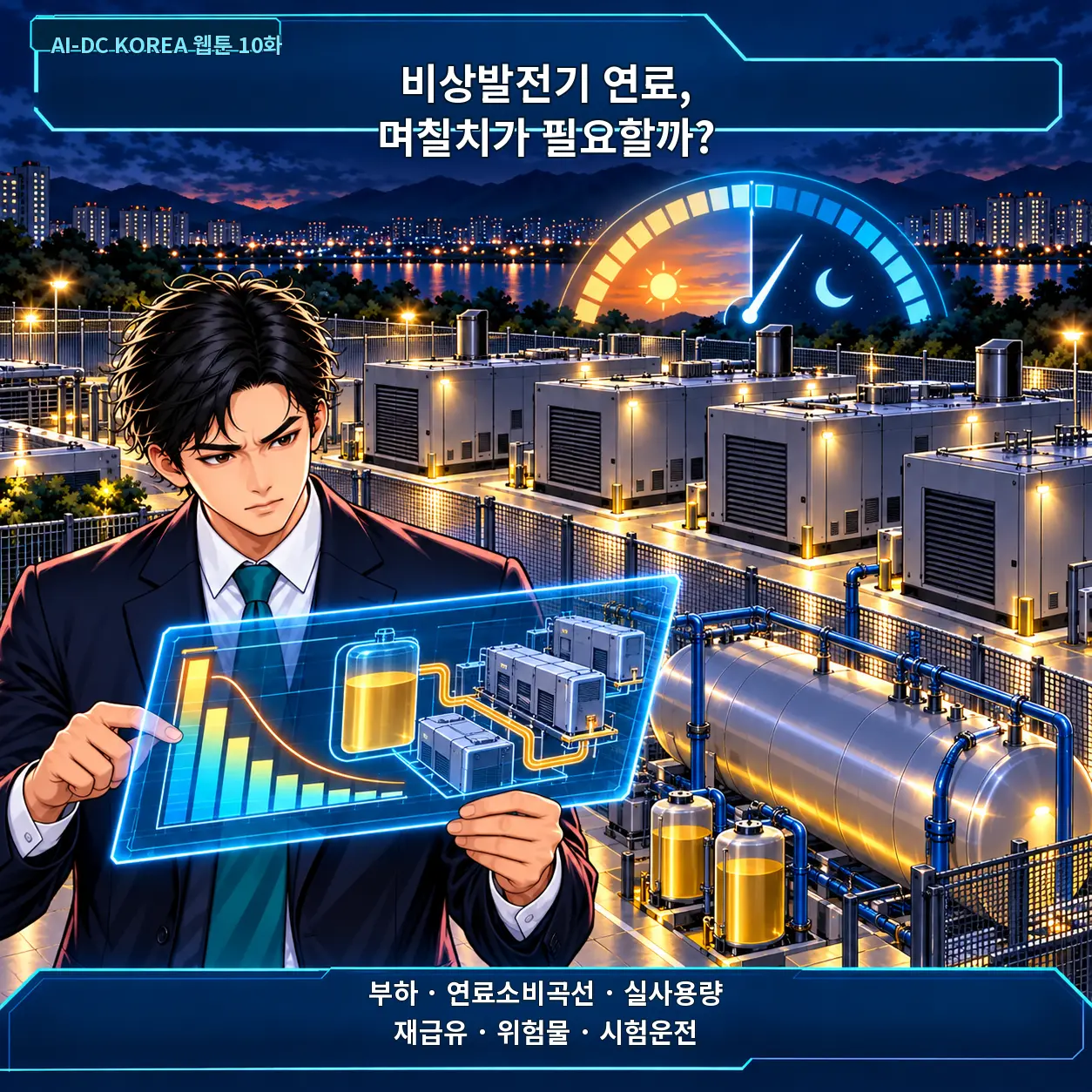
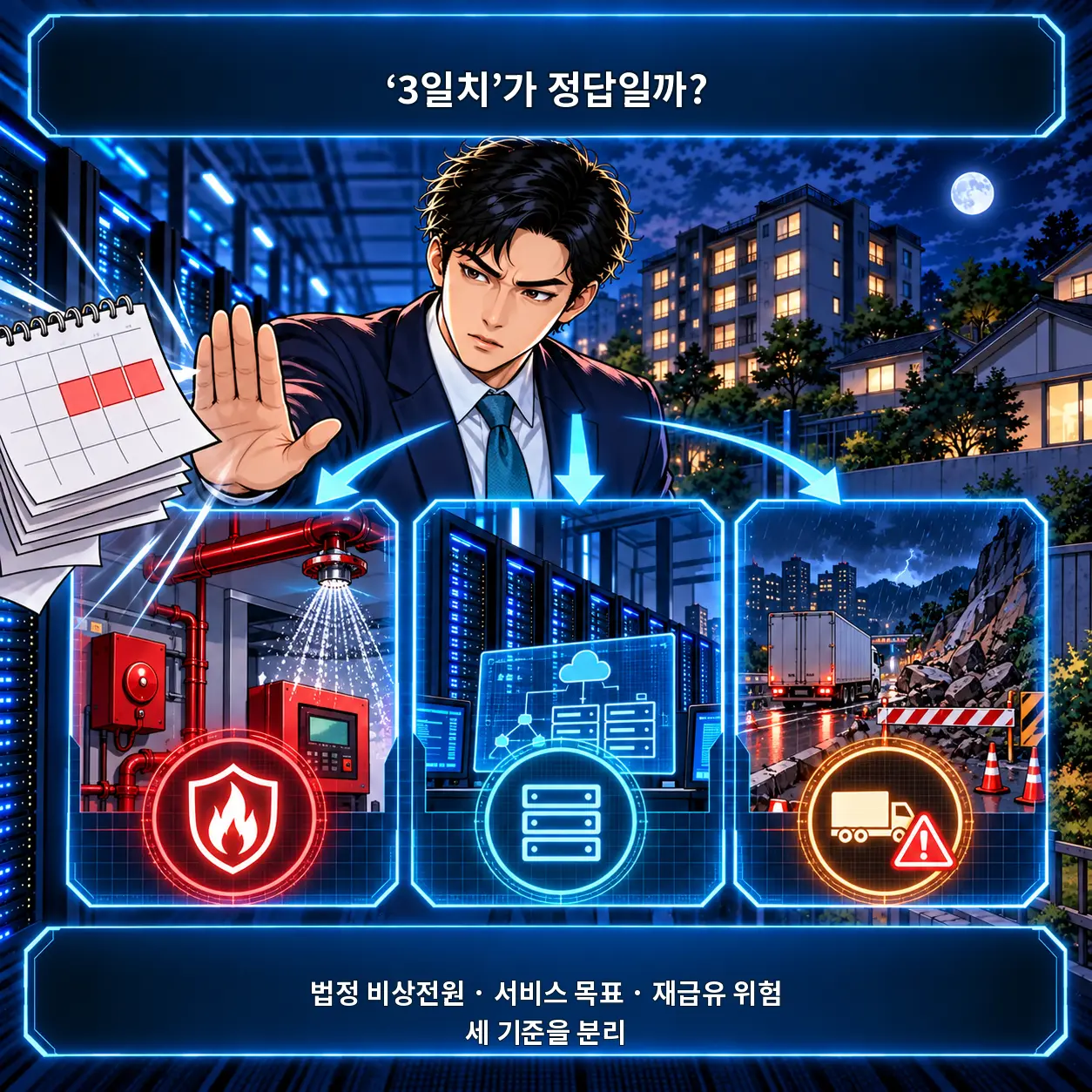
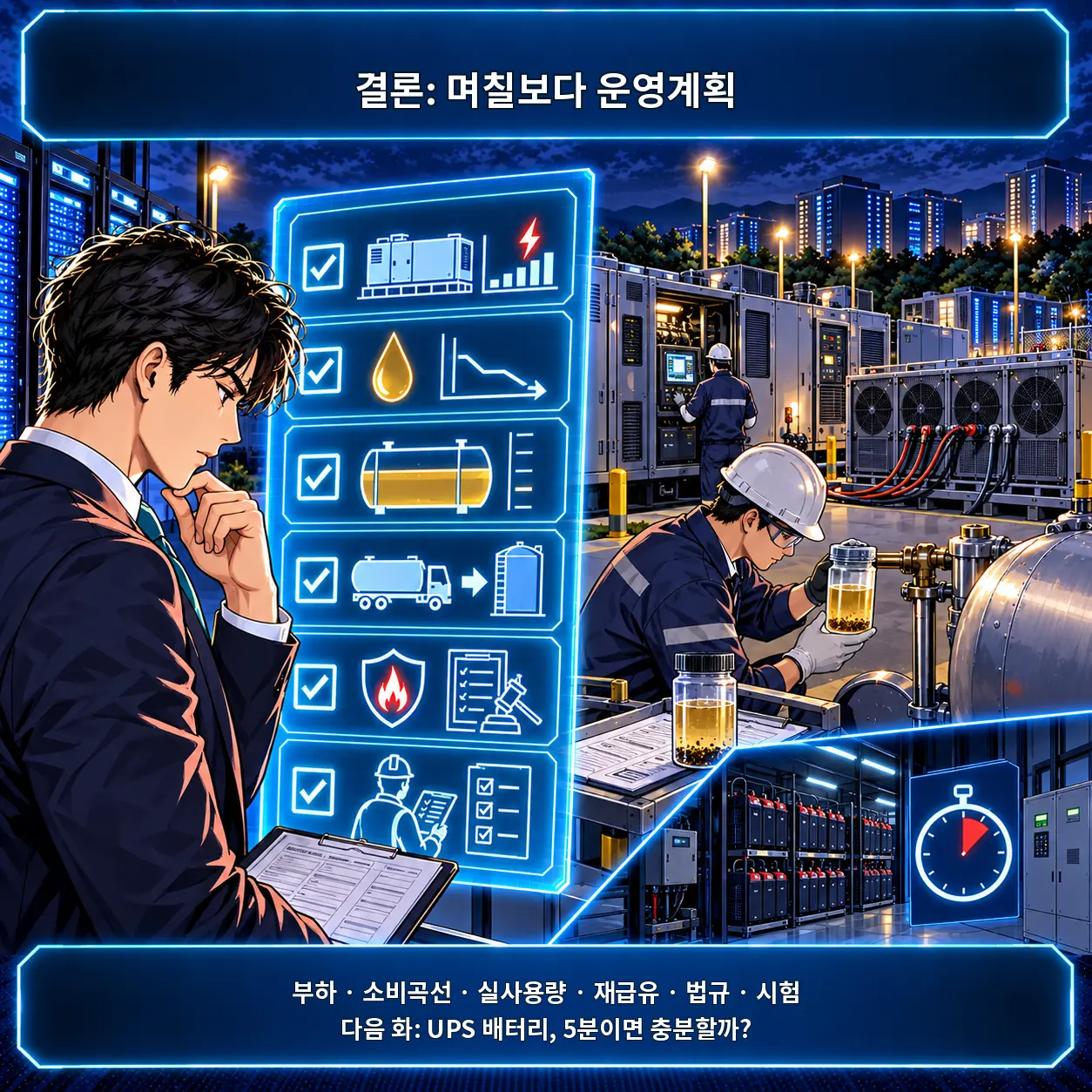
If you start by setting the tank capacity—such as “three days’ worth, no matter what”—it will result in over- or under-design. You must calculate the required fuel by correlating the actual emergency operating load, the consumption curves for each generator, the tank’s actual usage, the first confirmed refueling time, and applicable regulations.
First, distinguish between the legally required backup power duration for fire protection systems, the data center’s service continuity objectives, and the risk of fuel resupply during a disaster. Since domestic laws and regulations do not prescribe a uniform “X number of days” for all data centers, a longer self-sufficiency period is determined based on the operator’s SLA and risk analysis after meeting fire safety and building code requirements.
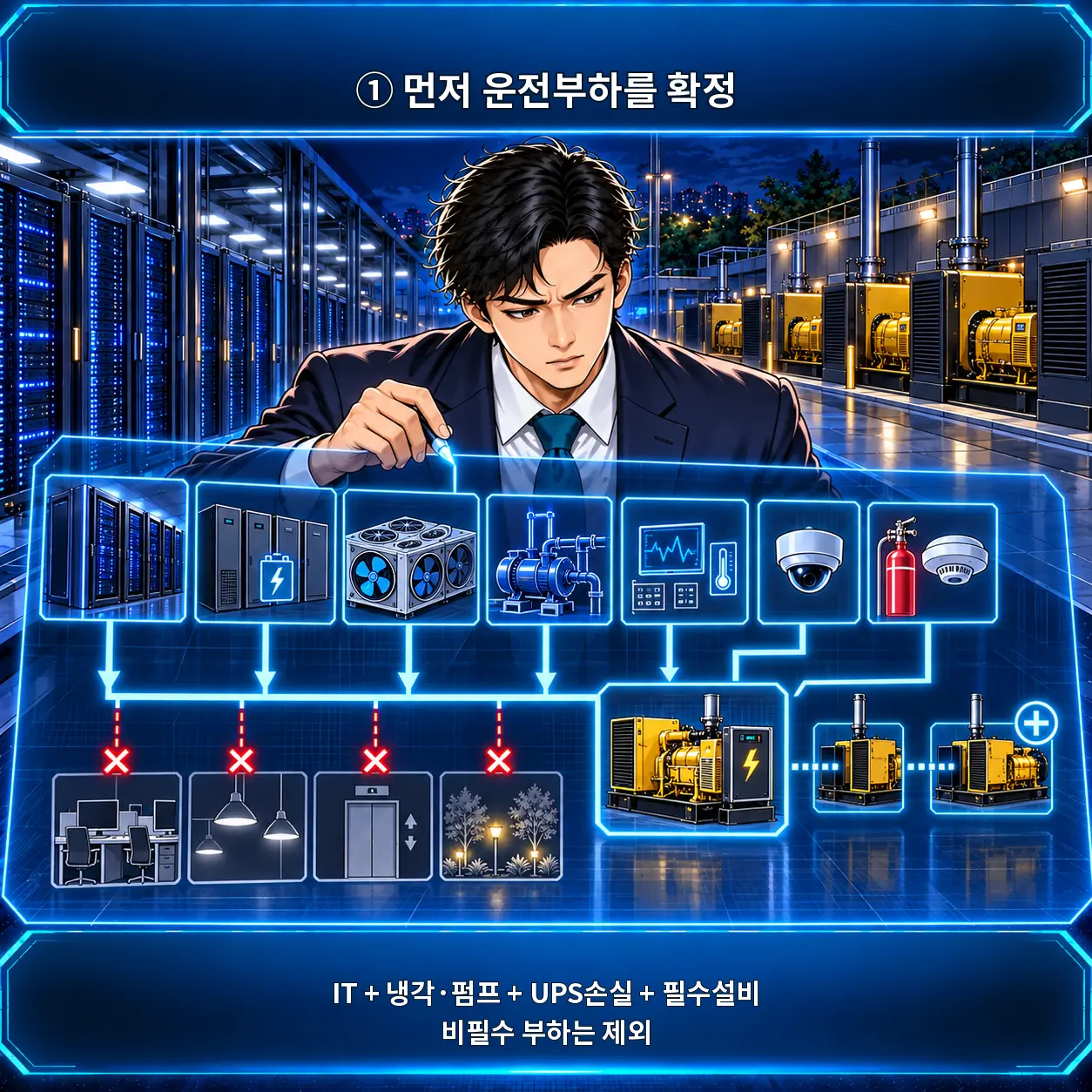
The operating load of a generator is not determined solely by the IT nameplate capacity. In the event of a power outage, it must maintain IT load + UPS losses + cooling units, fans, and pumps + essential auxiliary equipment such as control, communications, security, and fire protection systemsSum these values, excluding office and convenience loads that can be reduced. The actual number of generators required to handle that load and the N+1 failure scenario must be determined.
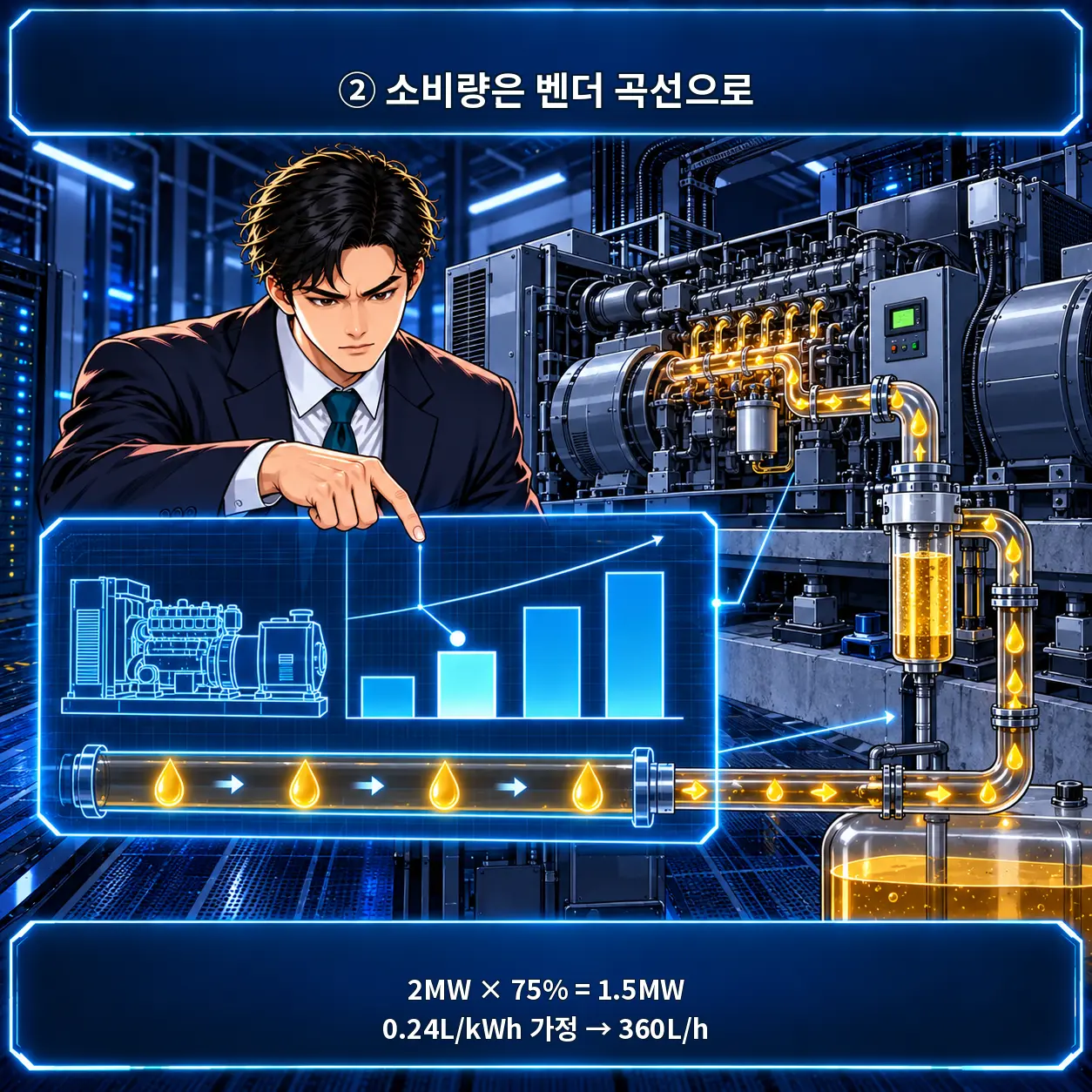
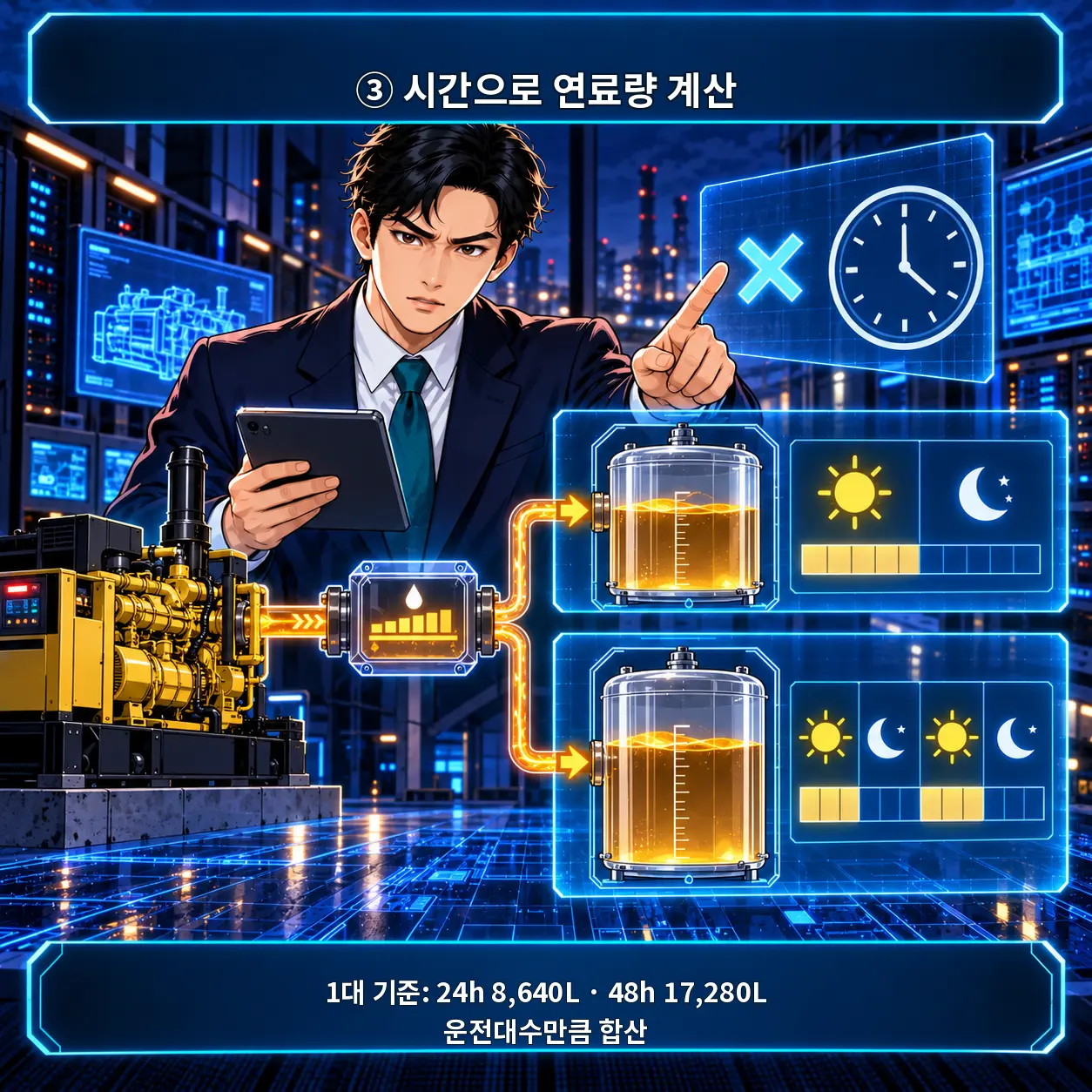
Hourly fuel consumption is calculated using the load-specific consumption curves (25%, 50%, 75%, and 100%) provided by the generator manufacturer. As an initial comparison example, assuming a 2 MW generator supplies 1.5 MW (75% of capacity) and the non-fuel consumption rate is 0.24 L/kWh, 360 L per hourIf one unit runs for 24 hours, it consumes 8,640 L; for 48 hours, 17,280 L. In actual projects, these figures must be replaced with vendor-guaranteed values that account for the engine model, ambient temperature, altitude, fuel specifications, and auxiliary loads.
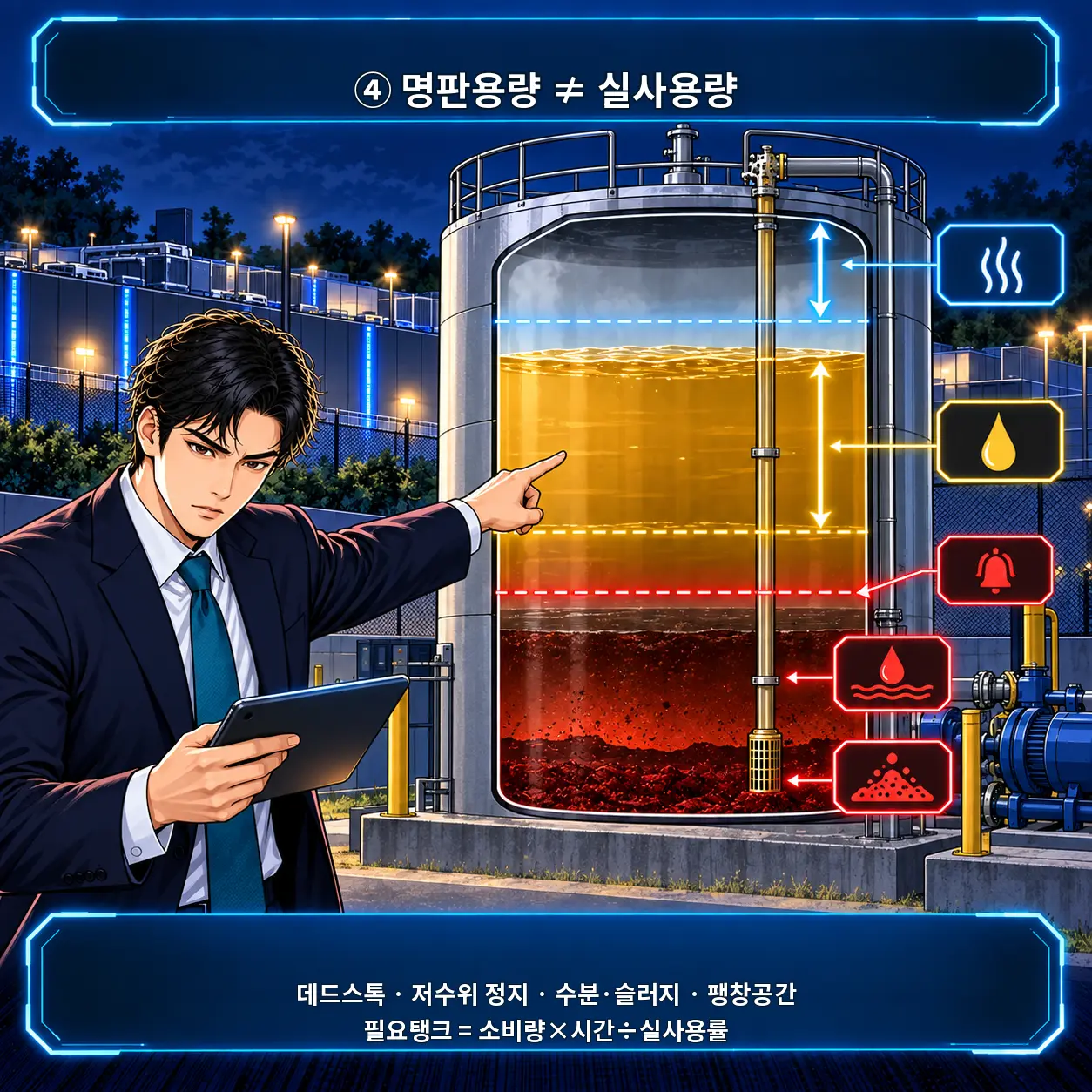
The capacity listed on tank nameplates differs from the actual usable capacity. You must exclude deadstock that pumps cannot draw, low-level shutdown settings, water held in piping and day tanks, water content and sludge, space for thermal expansion and overfilling prevention, and operational reserves. Therefore, the formula is Required tank capacity = Total hourly consumption × Target operating time ÷ Actual utilization rateThat is.
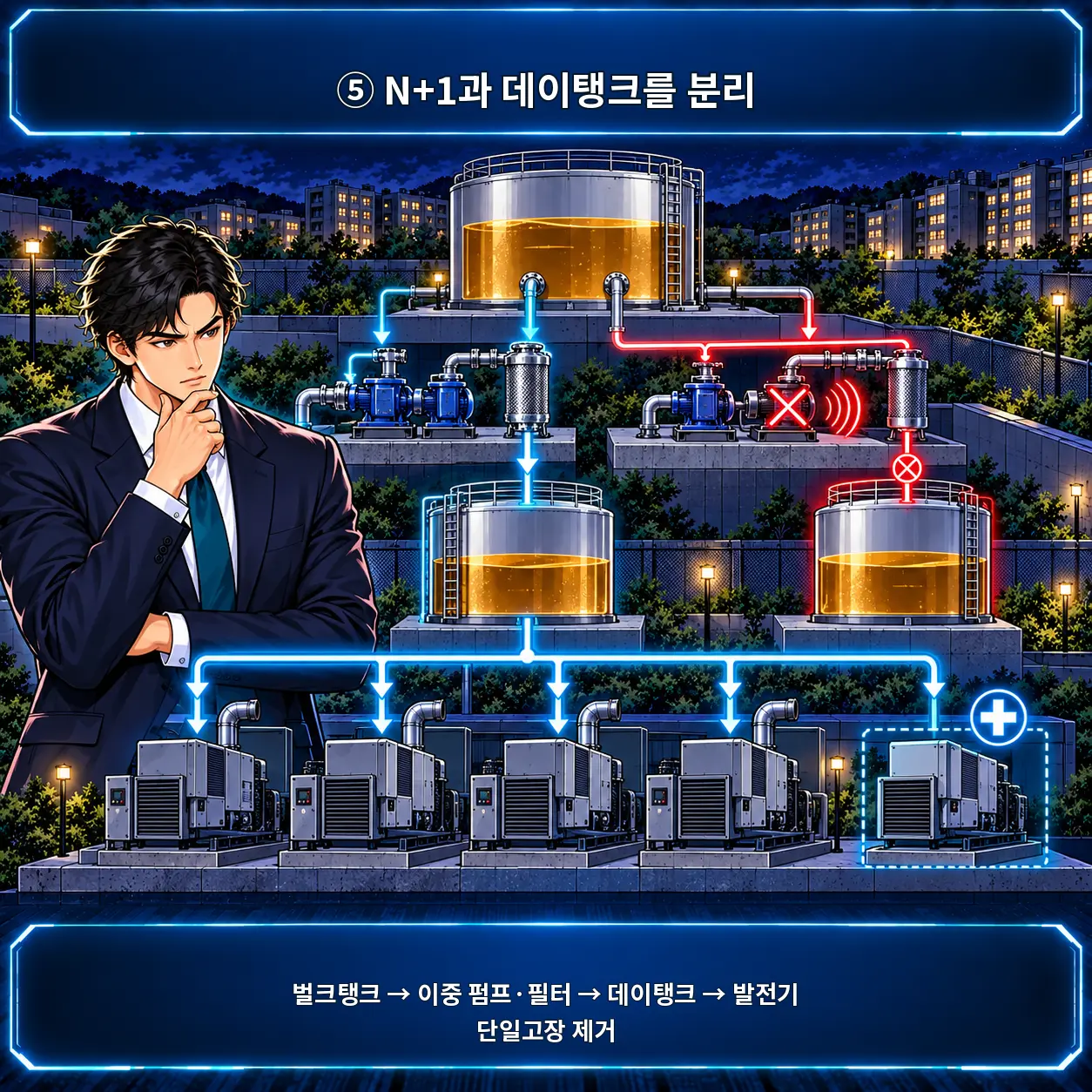
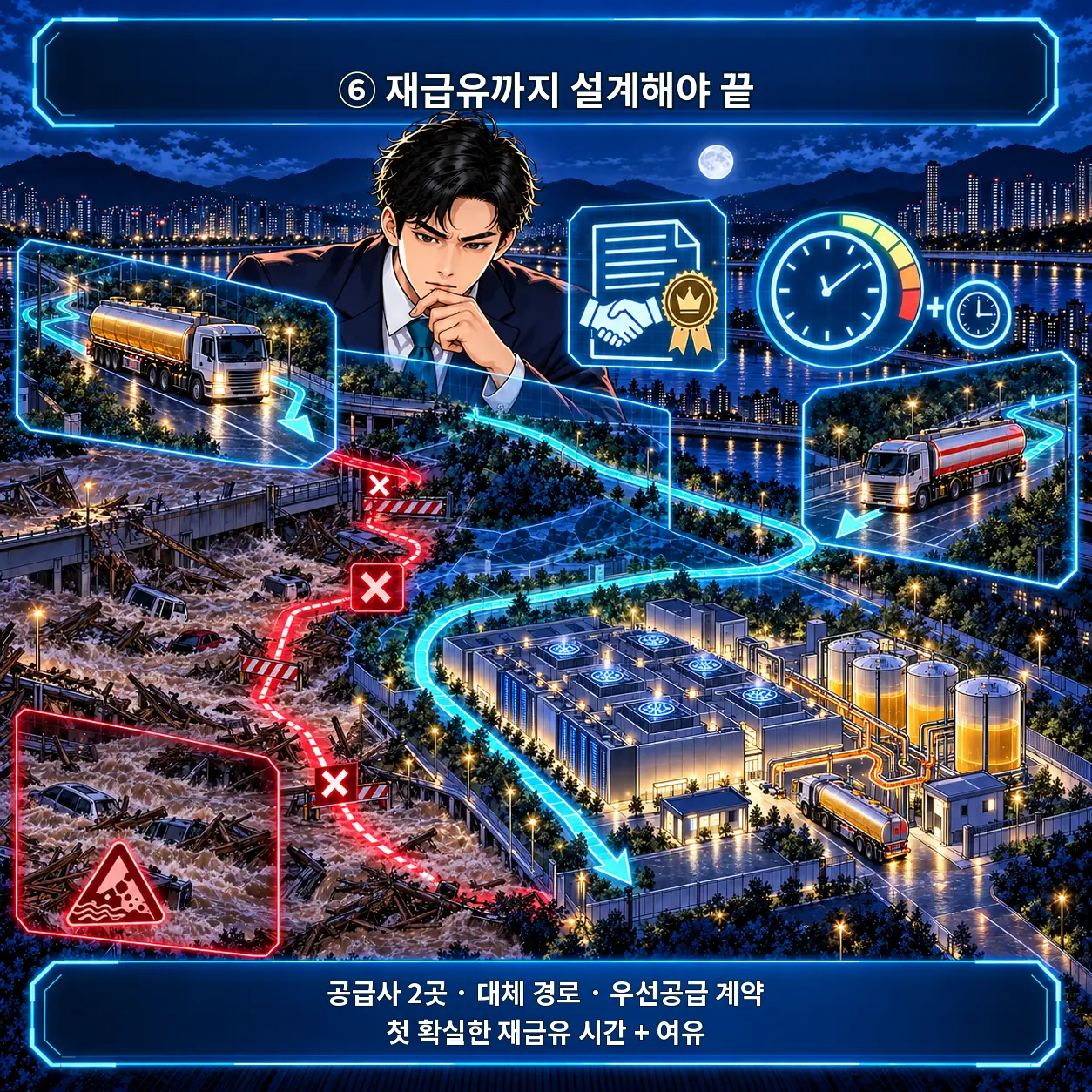
To prevent single-point failures, a system comprising dual pumps and filters, separable piping, day tanks, and bypass routes is configured from the bulk tank to the generator. Since the self-sufficiency time must be determined not only by storage volume but also by the time until the first confirmed refueling and the margin of safety, we verify two suppliers, alternative transportation routes, priority supply contracts in the event of a disaster, and the feasibility of site access and unloading.
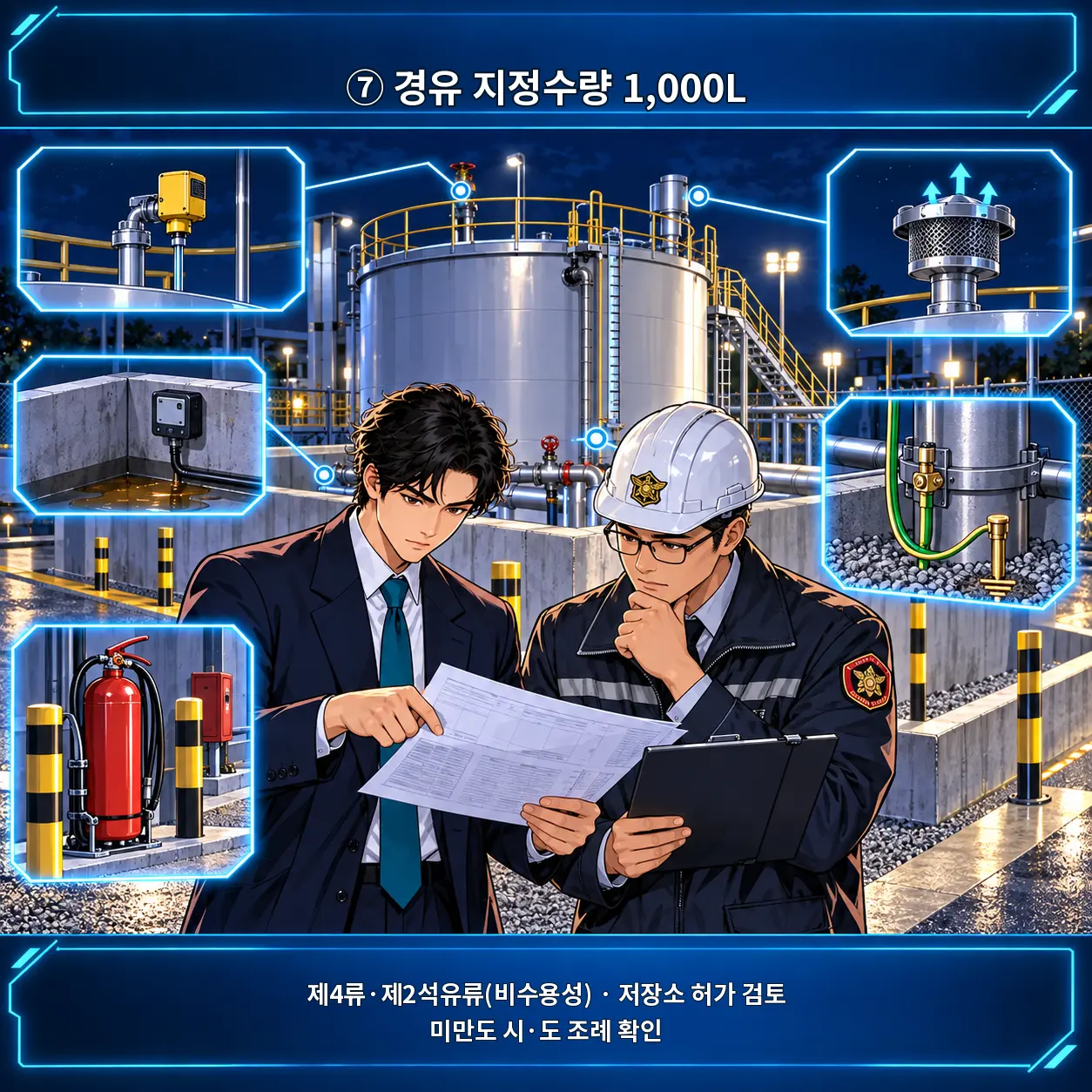
Diesel is generally classified as a non-water-soluble Class 2 petroleum product under Class 4 hazardous materials, and the specified quantity is 1,000LFacilities that store or handle quantities exceeding the designated threshold must confirm with the fire department whether they are subject to installation permits, such as for hazardous materials storage facilities; even facilities handling quantities below the designated threshold must review the criteria for small quantities of hazardous materials as specified in city or provincial ordinances. Designs must also incorporate oil containment, leak detection, overcharge prevention, ventilation, grounding, fire safety, and measures to prevent soil and groundwater contamination.
During the operational phase, water level gauges, low- and very-low-water-level alarms, automatic isolation, pumps and valves, and actual load or load bank tests are verified on a regular basis. For long-term fuel storage, samples are taken to check for moisture, sediment, and microorganisms, as well as fuel quality, and fuel filtration and purification plans are implemented as needed.
※ This content is intended for preliminary review during the project’s initial stages. The example consumption rates are not guaranteed values for specific generators; actual capacity and permits must be confirmed based on manufacturer data, electrical, mechanical, and fire safety designs, and verification by the relevant fire department and environmental agencies.
Start site analysis, including emergency power →National Law Information Center: Act on the Safety Management of Hazardous Materials ↗
National Law Information Center: Act on the Installation and Management of Firefighting Facilities ↗