
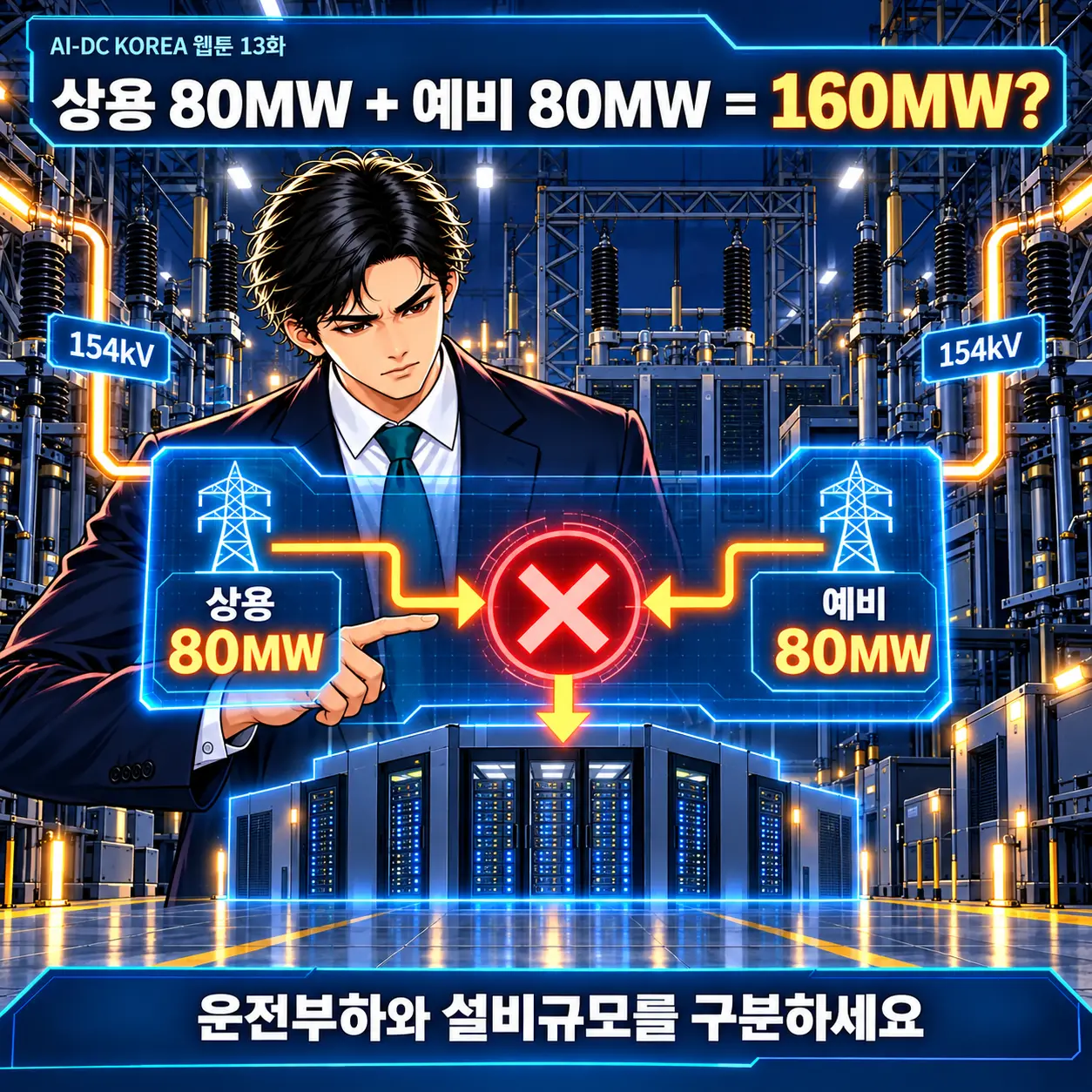
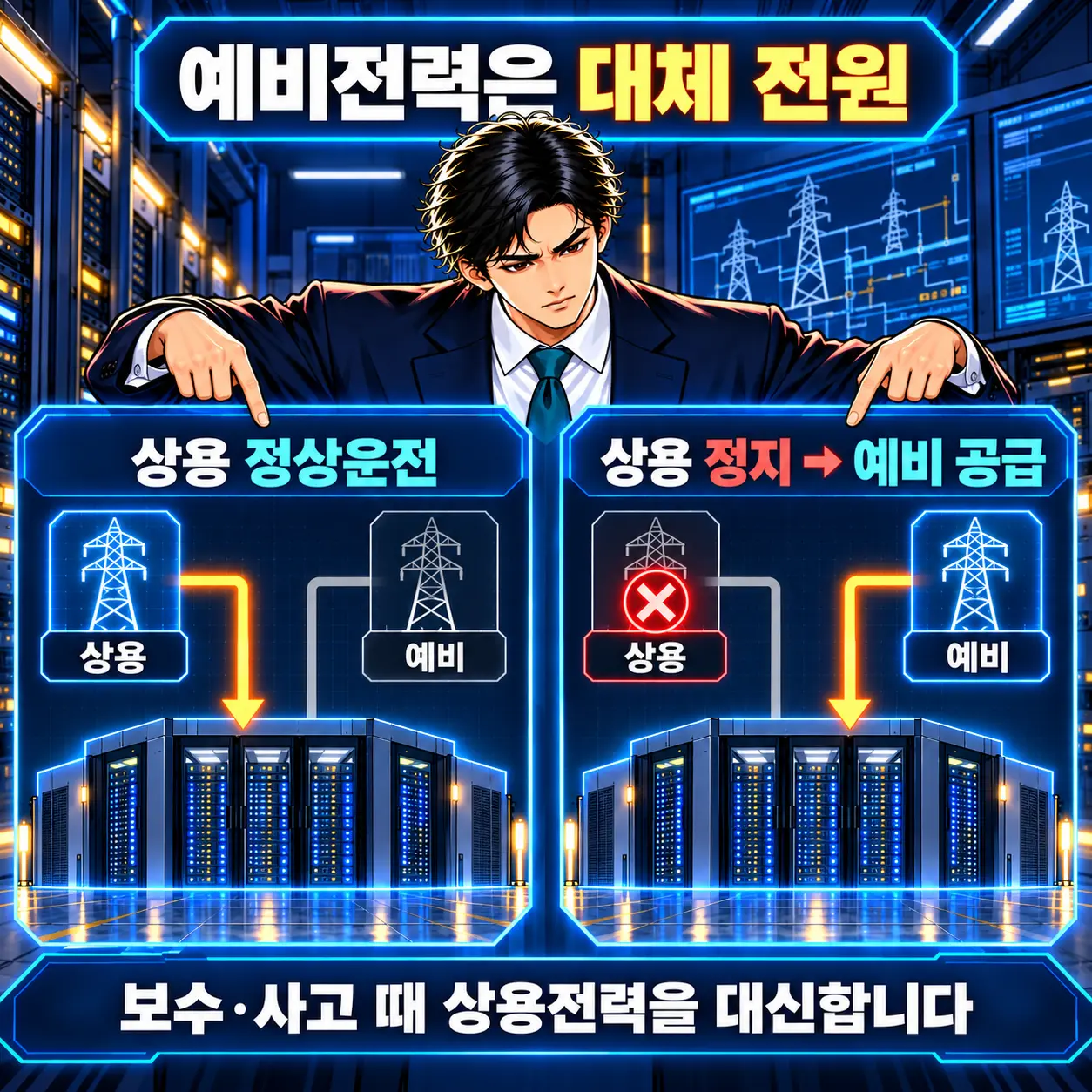
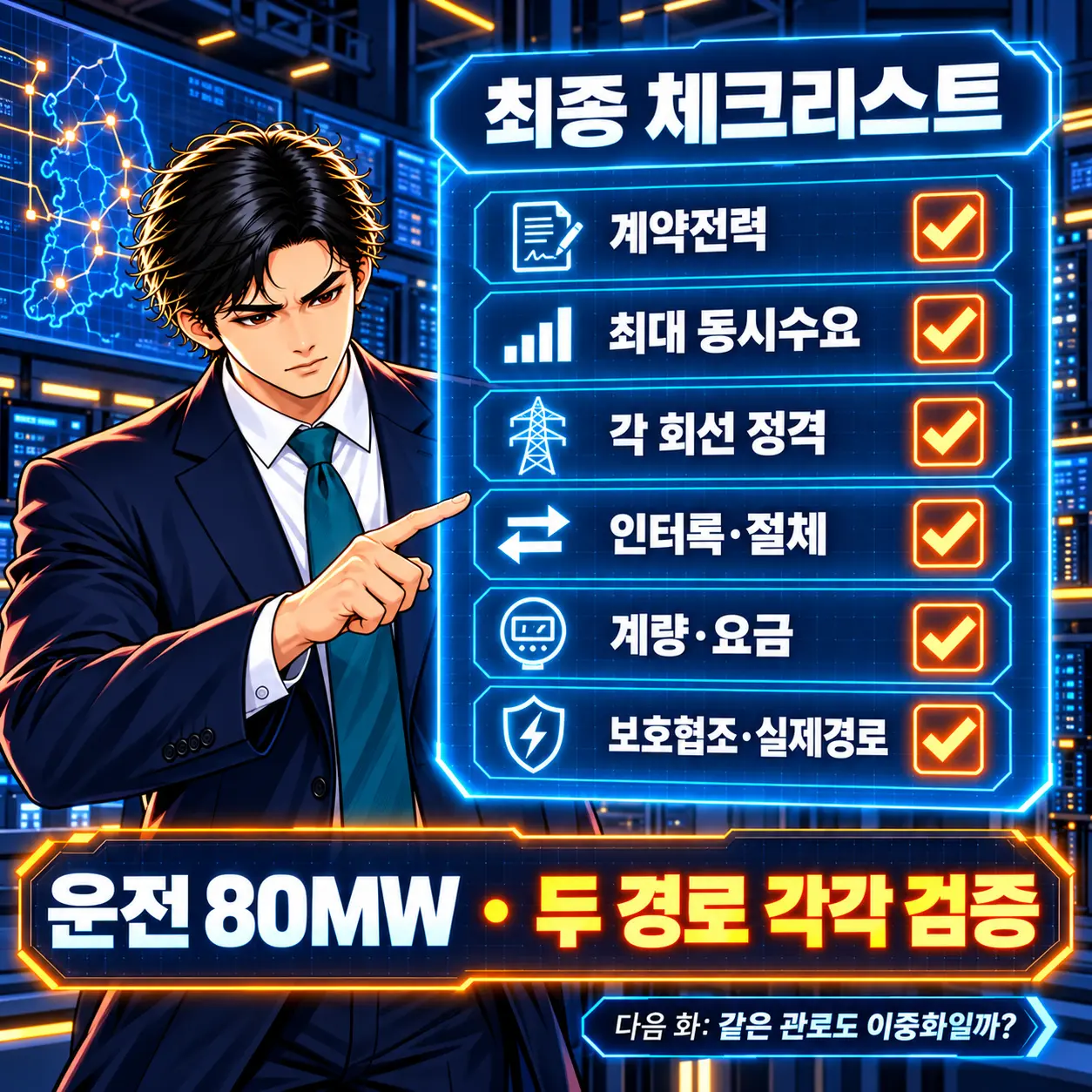
Operating load must be distinguished from contracted and installed capacity. Since reserve power serves as a substitute for commercial power, the maximum simultaneous usage is generally limited to 80 MW; however, the contracted power for each supply path, as well as the conditions regarding transmission lines, circuit breakers, protection, and metering, must be reviewed separately.
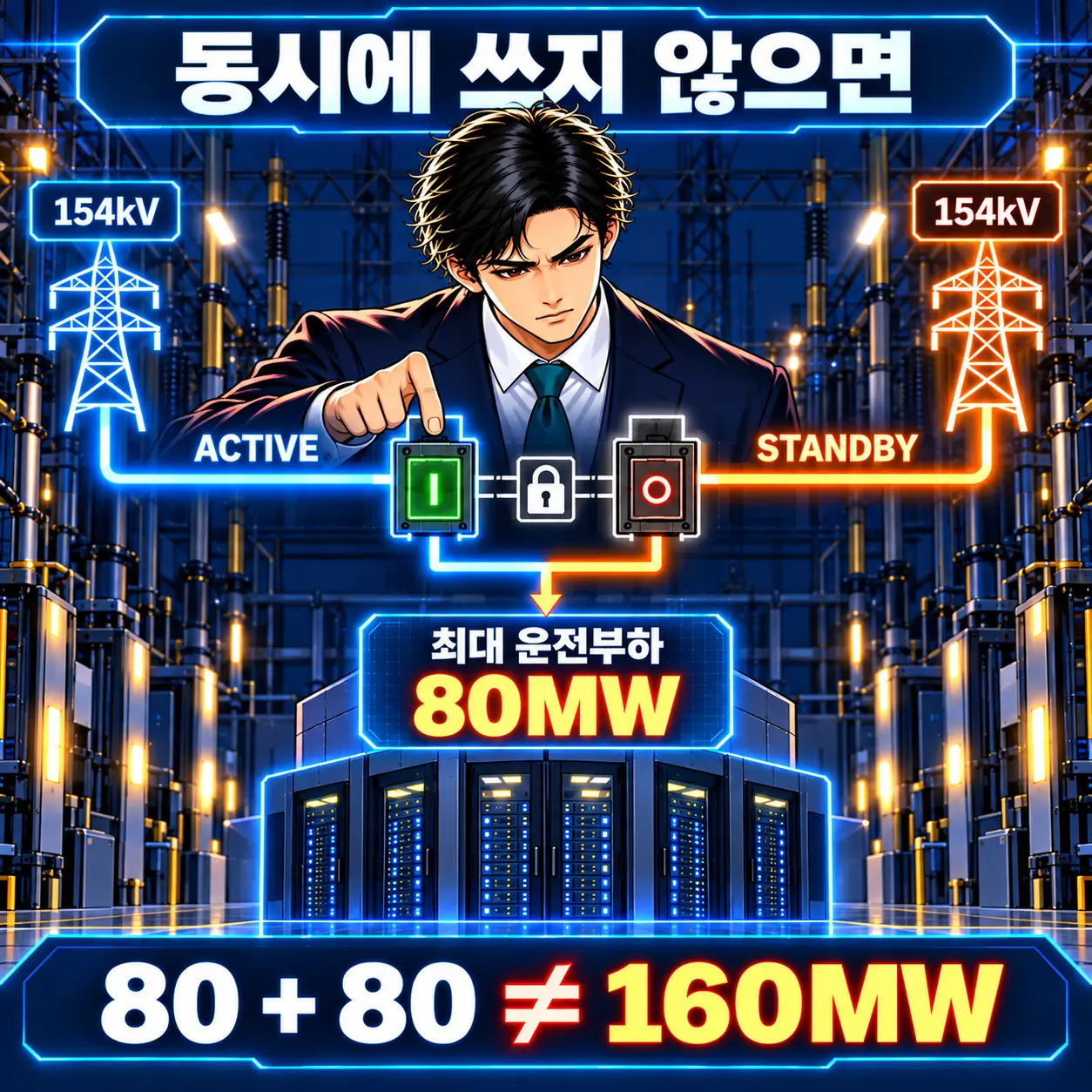
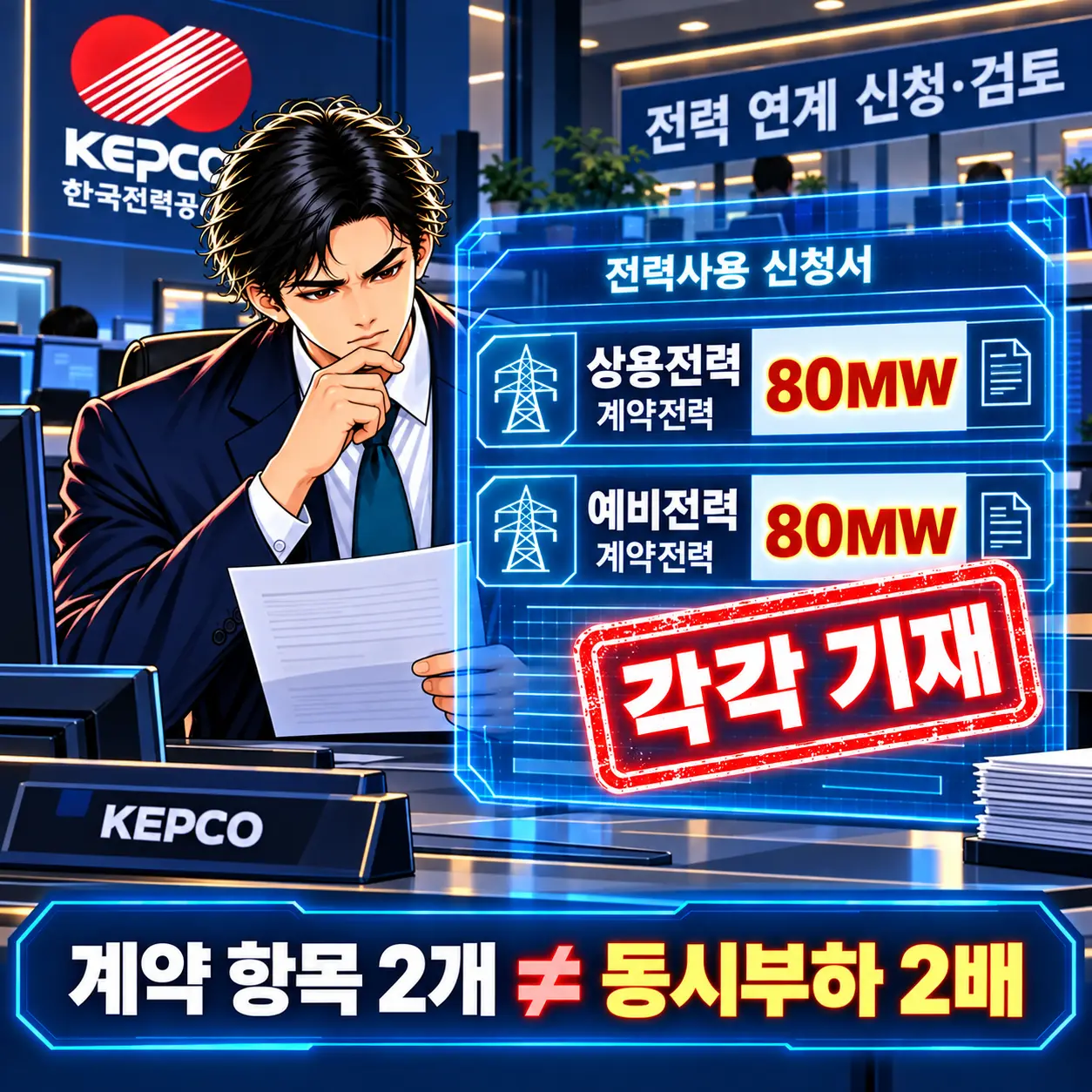
According to Article 63 of KEPCO’s General Terms and Conditions of Supply, reserve power is used when power supply is interrupted due to maintenance or accidents involving commercial supply facilities, Electricity supplied as a substitute for commercial powerTherefore, during normal operation—where 80 MW of commercial capacity and 80 MW of reserve capacity are configured to substitute for one another—the maximum load simultaneously drawn by the data center is, in principle, 80 MW, not 160 MW.
However, the application and contract documents specify a contracted capacity of 80 MW for commercial power and 80 MW for reserve power, respectively. According to the terms and conditions, the contracted capacity for reserve power is, in principle, the same as that for commercial power; however, if the customer wishes, it can be set differently within the limits of the commercial contracted capacity. In other words, There are two contract itemsand the fact that Simultaneous load doublesThat claim is completely different.
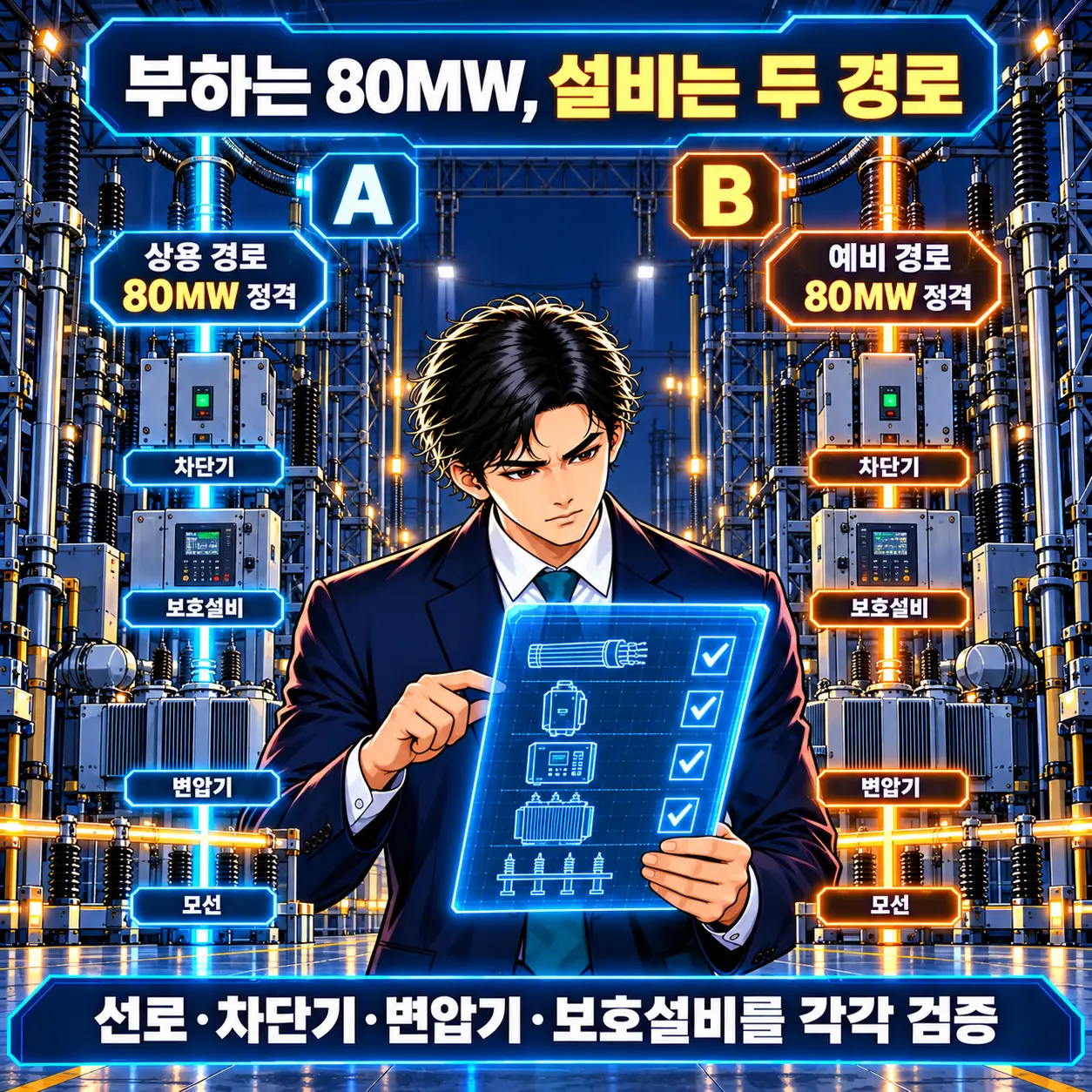
From a power infrastructure perspective, each of the two supply paths must be capable of handling its target load. To maintain 80 MW using a single backup line after the primary line fails, the rated capacity and short-circuit breaking capacity of the backup lines, cables, circuit breakers, transformers, busbars, protective relays, grounding systems, and metering equipment must meet the relevant operating conditions. Therefore, even if the load is 80 MW, the equipment to be installed and the construction costs will not be limited to the scale of a single line.
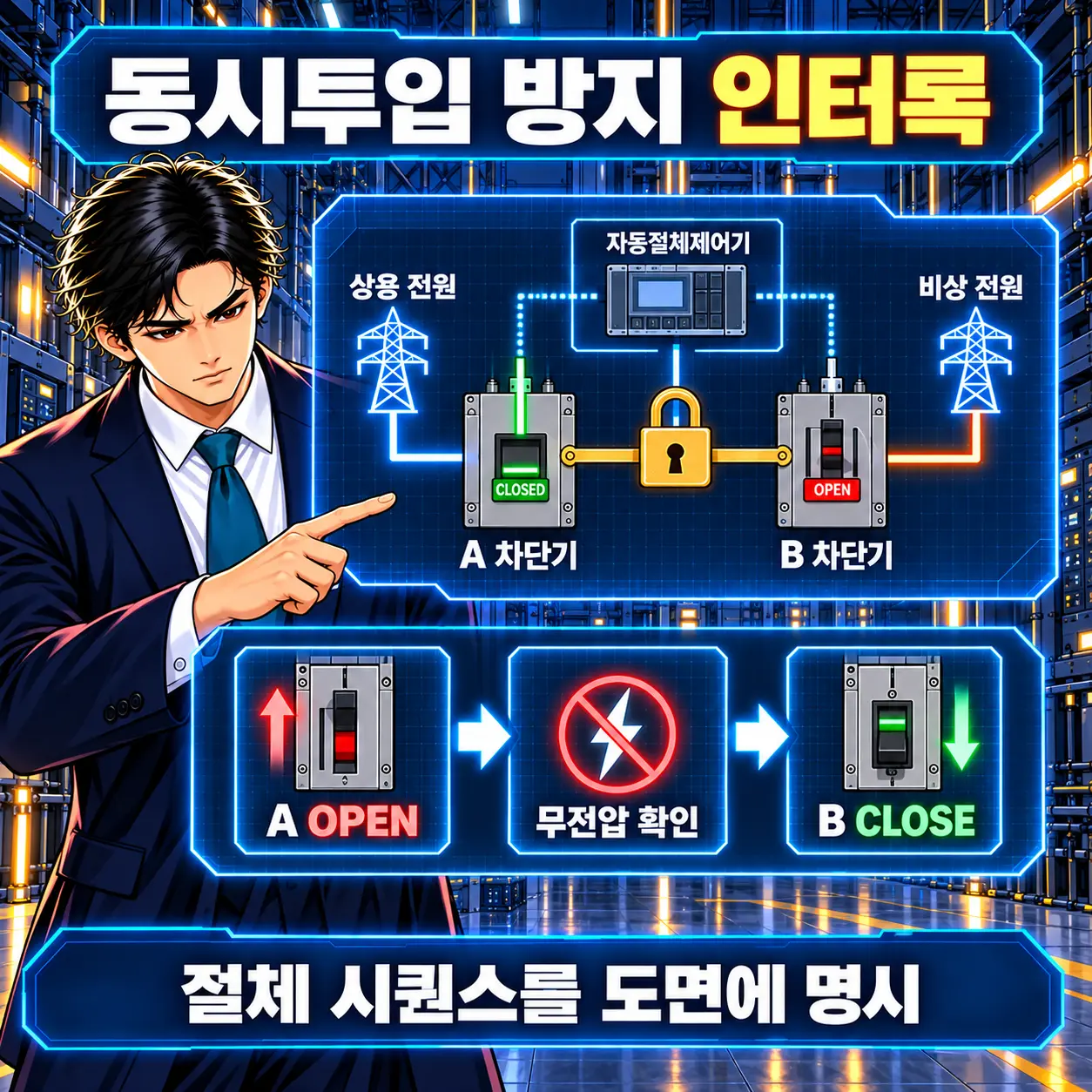
As a general rule, the terms and conditions require the necessary facilities to ensure that commercial power and reserve power cannot be used simultaneously. The single-line diagram for power reception shows Interlock to Prevent Simultaneous Activation, Circuit breaker status monitoring, commercial power outage detection, backup line switching, reswitching after power restoration, and the display of manual/automatic modes and safety status in the event of a failure must be provided. Special methods that do not involve issues with grid protection coordination, contracted power, or metering will be reviewed only under conditions pre-approved by KEPCO.
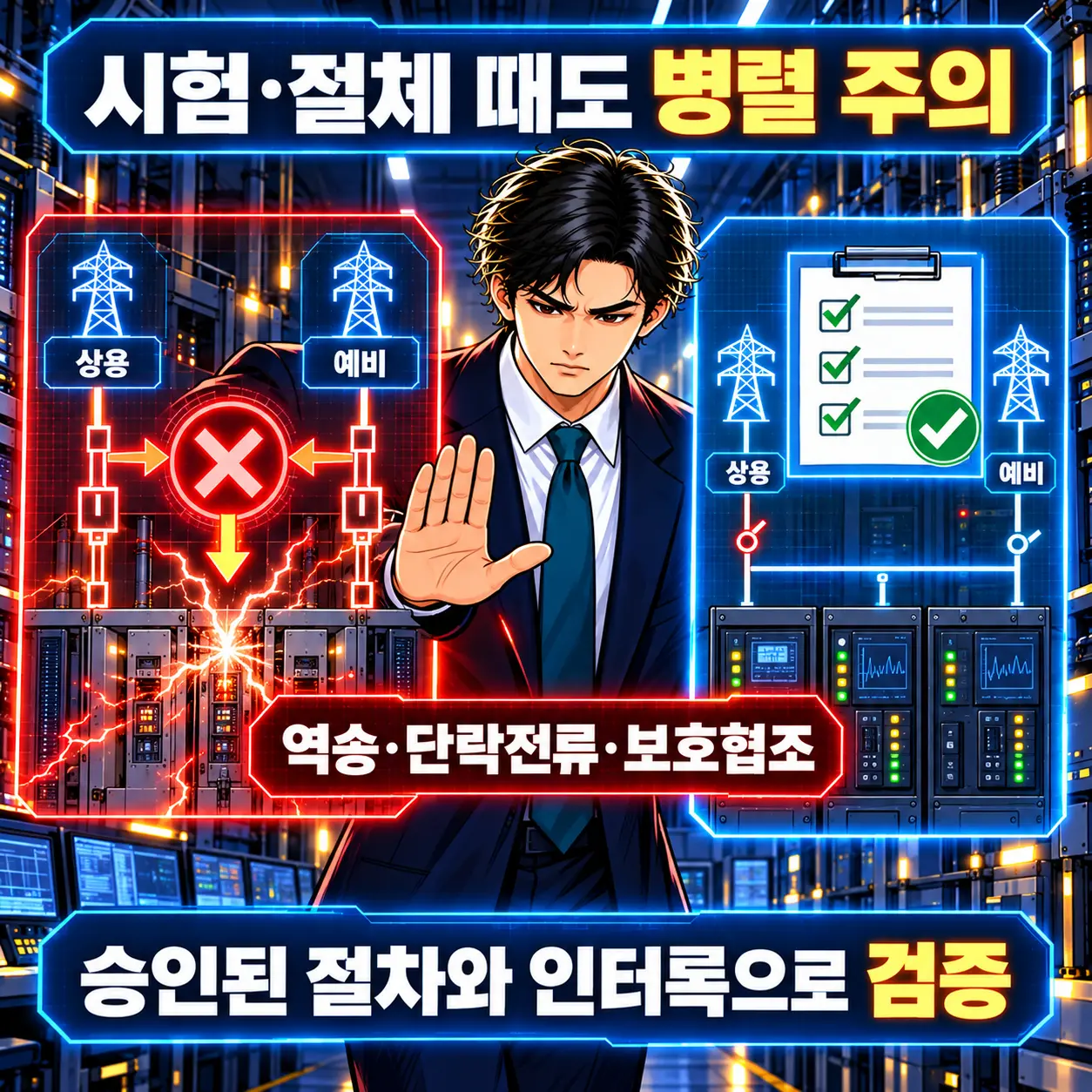
Switching between production and standby modes is not simply a matter of alternating between two circuit breakers. A sequence must be designed and tested comprehensively, including verification of de-energization, residual voltage, phase conditions, the operating status of UPSs and generators, the load restoration sequence, and conditions prohibiting re-energization. Unauthorized momentary parallel operation can cause reverse power flow between systems and unexpected short-circuit currents.
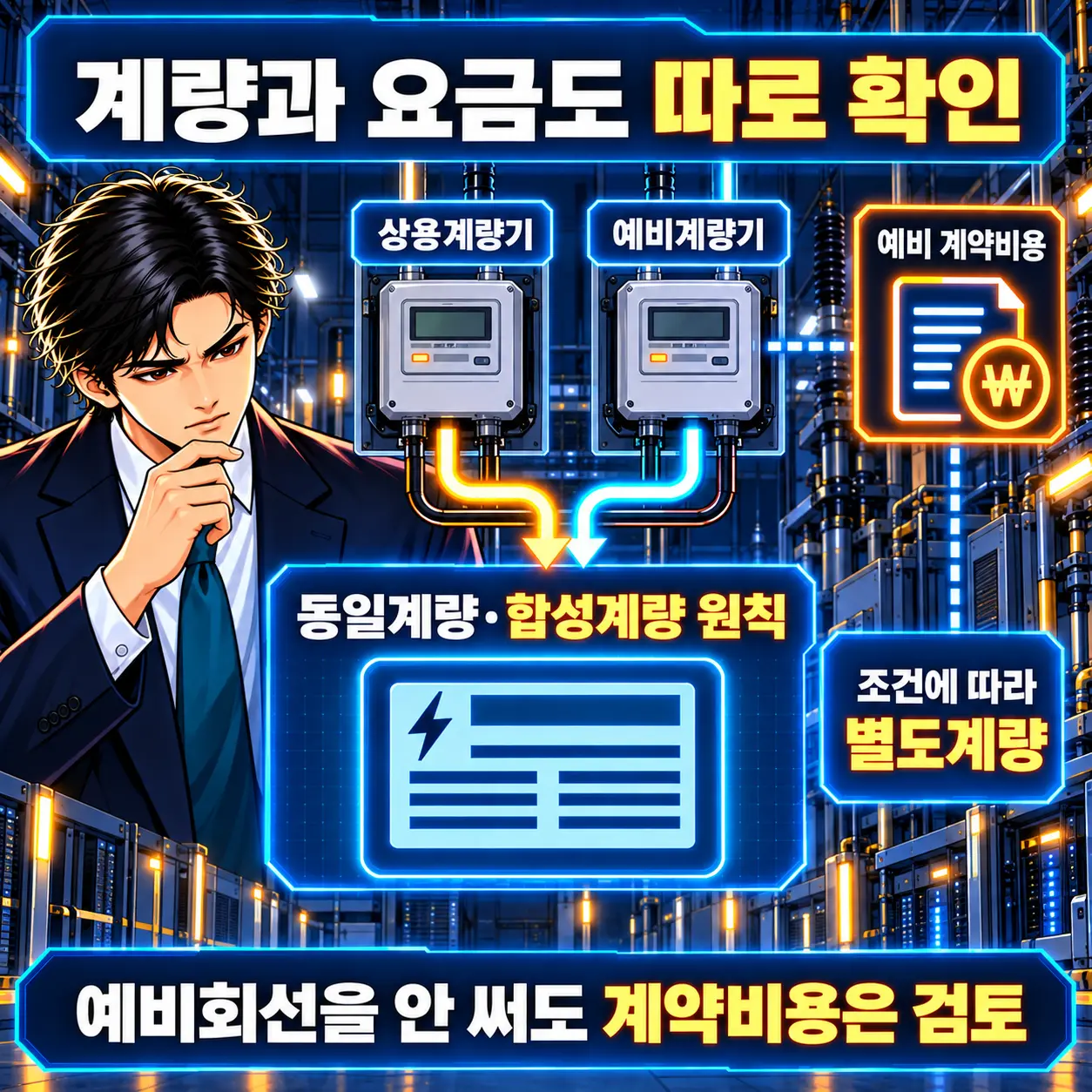
As a general rule, reserve power is metered on the same meter as commercial power or via combined metering; however, it may be metered separately if the contracted power or supply voltage differs, or if it is technically unavoidable under the implementing regulations. Even if the reserve circuit is not used, a basic fee for reserve power may apply in accordance with the terms and conditions; therefore, project costs should include Not only electricity consumption charges but also reserve power contract costsThis is also reflected.
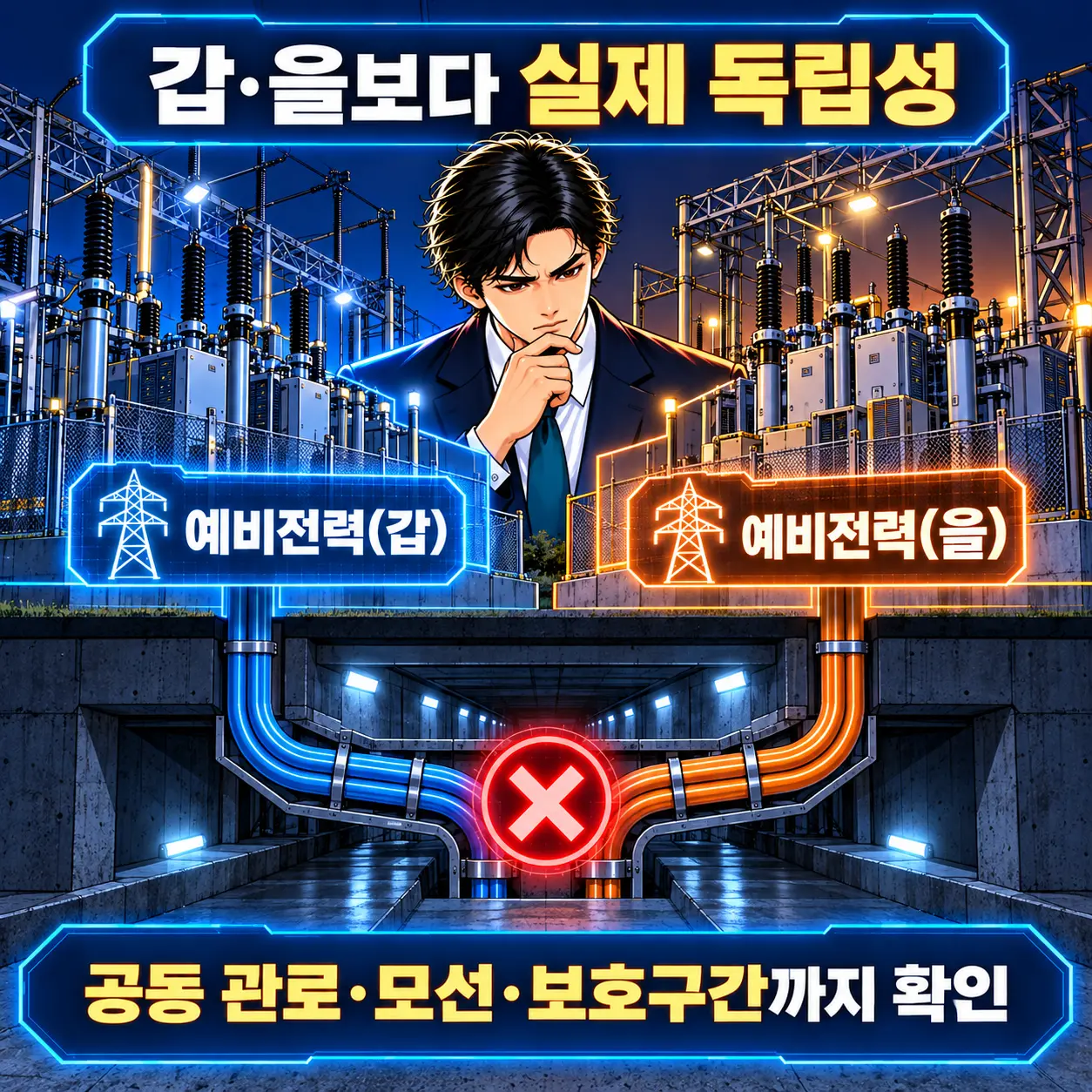
Reserve Power (Type A) refers to power received at the same voltage as the commercial grid from a substation supplying commercial power, while Reserve Power (Type B) refers to power received from a different substation or at a voltage different from the commercial grid. Actual independence is not guaranteed by the designation alone. If two lines share the same transmission tower, common conduit, common power duct, common busbar, or the same protection zone, a single incident could cause both lines to go offline simultaneously.
In technical documents, include at least: ① commercial and reserve contracted power, ② normal maximum simultaneous demand, ③ ratings of each circuit and power receiving equipment, ④ the supplying substation and actual route, ⑤ anti-simultaneous-engagement interlocks, ⑥ metering method, ⑦ protection coordination and short-circuit current, ⑧ switching and restoration sequences, and ⑨ periodic testing conditions. One-line summaries such as “80+80=160” or “Just look at 800,000” are all insufficient.
※ This content is intended for conceptual review purposes using an example of 80 MW each for commercial and reserve capacity. Actual availability, contracted power, supply voltage, substation, transmission line route, protection coordination, metering, and rates must be finalized through KEPCO’s technical review, the electricity usage contract, and the detailed design by a registered electrical design firm.
Start site analysis, including commercial and backup power paths →Easy-to-Find Information on Everyday Laws — Standard Supply Terms and Conditions PDF ↗