
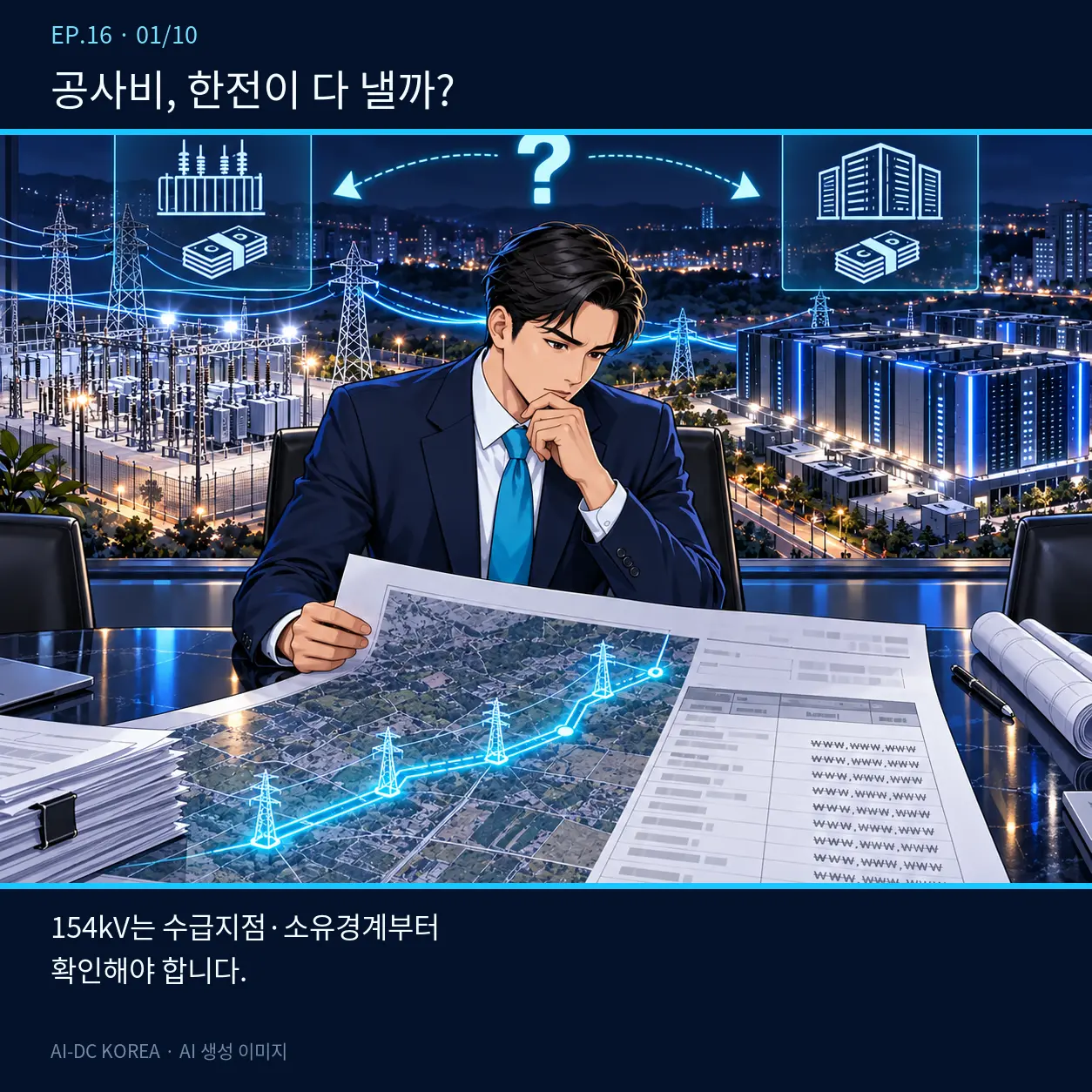


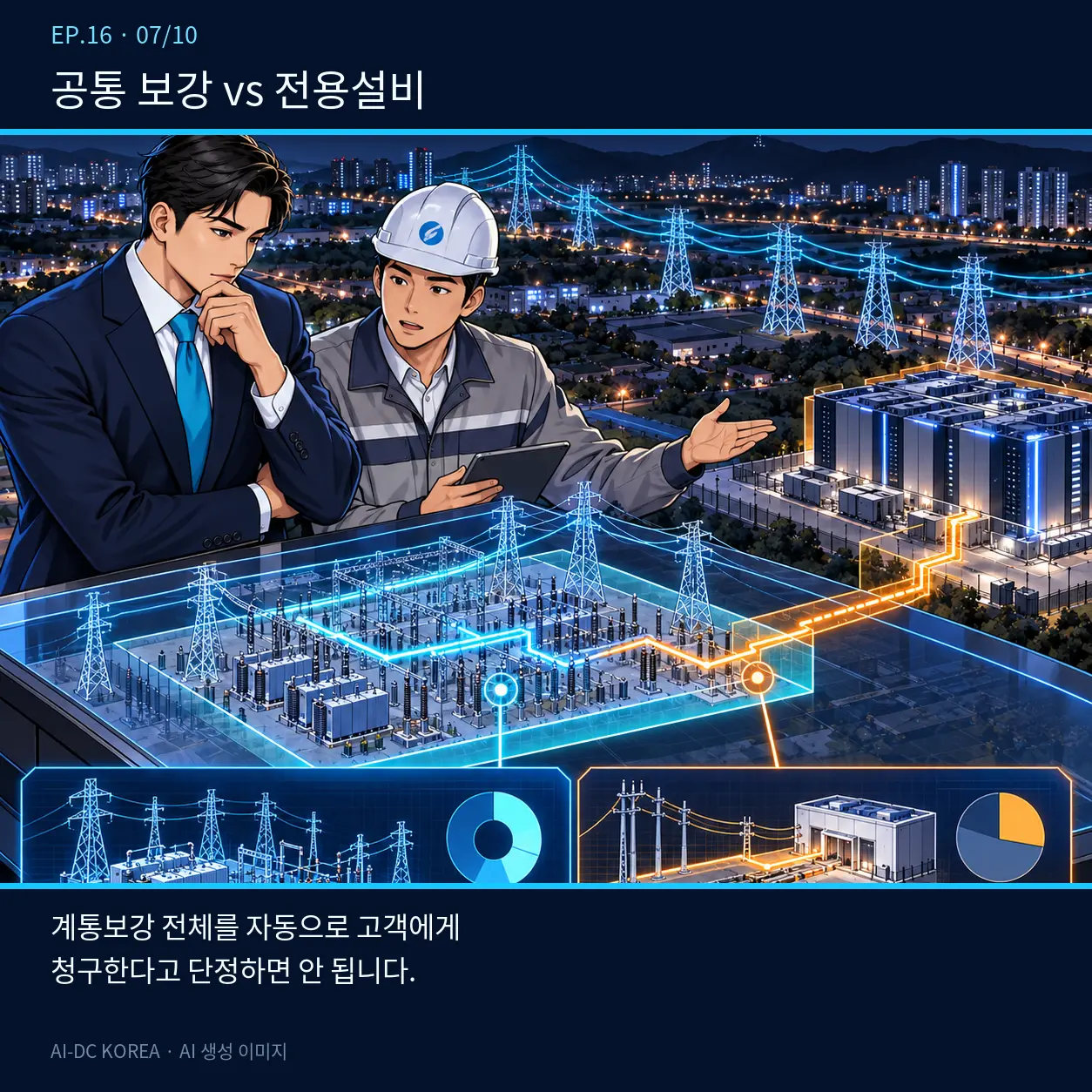


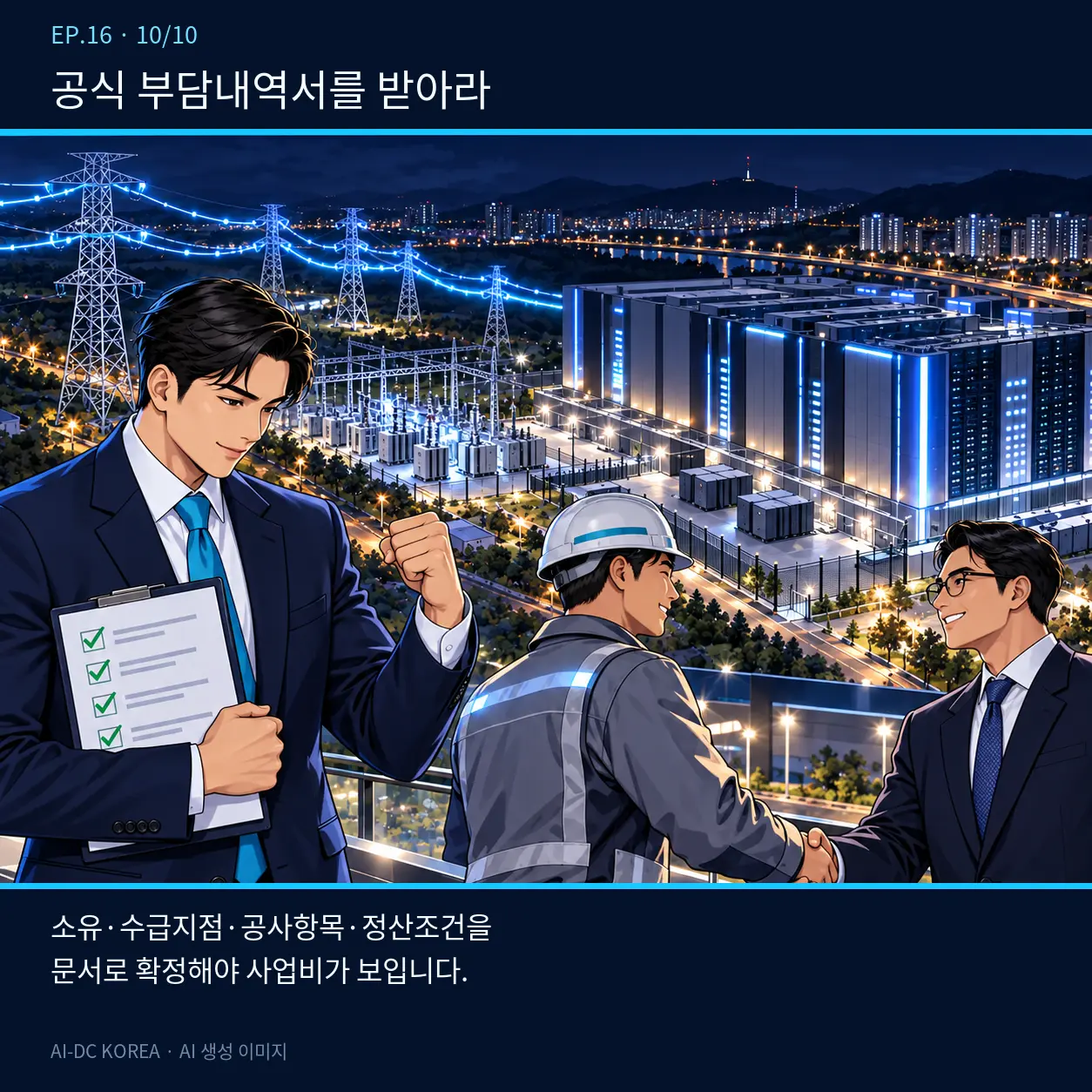
It is risky to assume that “since KEPCO is carrying out the construction, KEPCO will bear all the costs.” First, the supply and demand points and ownership boundaries must be determined, and then the costs must be broken down into KEPCO’s share, facility contribution fees, direct customer costs, and land and permitting fees.
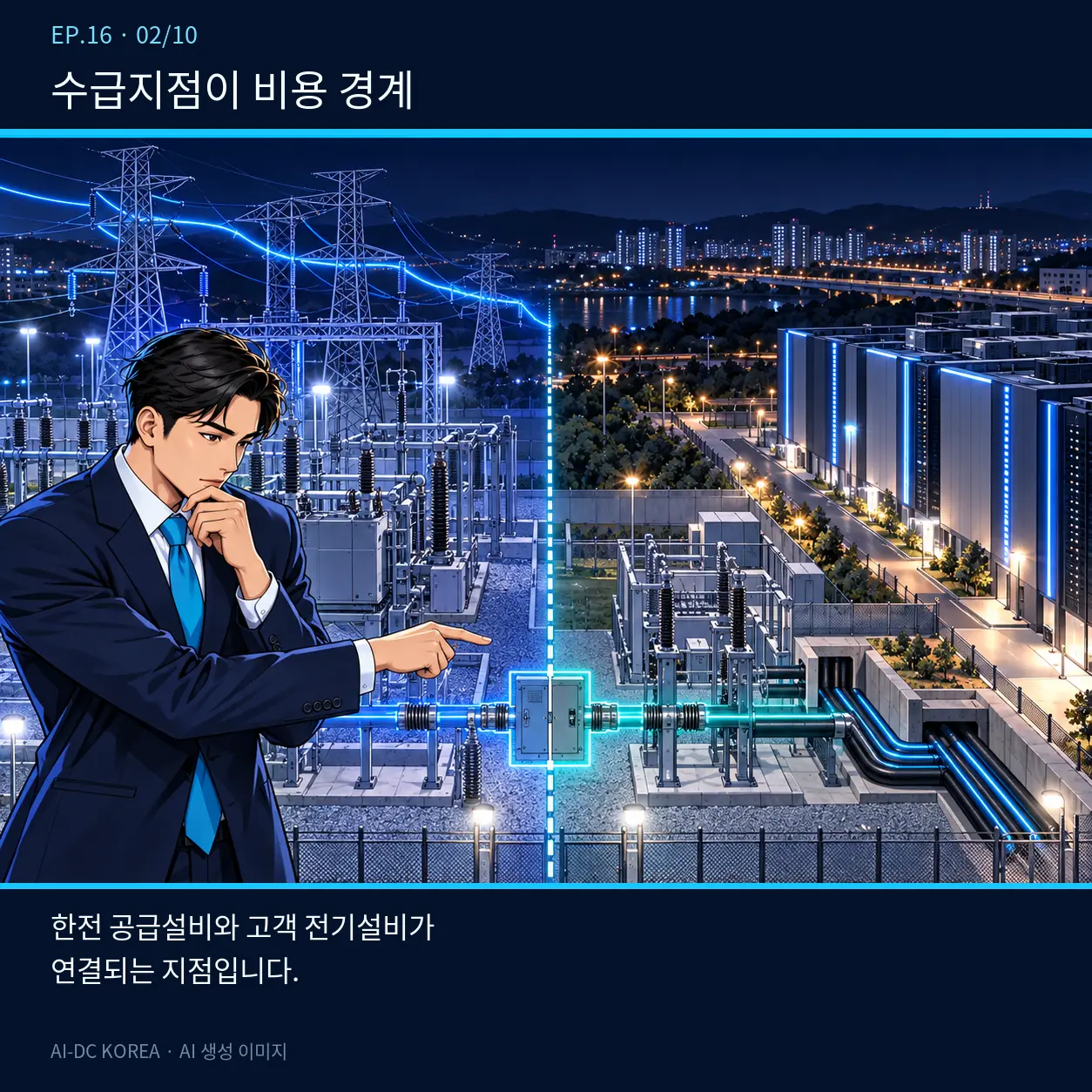
The first criterion is Supply/Demand Points and Facility Ownership BoundariesA supply point is the location where KEPCO’s power lines or service lines connect to a customer’s electrical equipment. Even for the same 154 kV service line installation project, cost items and schedule responsibilities will vary depending on the location of the supply point, the division between sections owned by KEPCO and those owned by the customer, and the entity commissioning the work.
According to the terminology in KEPCO’s Standard Supply Terms and Conditions, KEPCO-owned dedicated supply facilities intended to supply specific customers and KEPCO-owned extra-high-voltage supply facilities exceeding 22.9 kV are classified as special supply facilities. Facility charges for special supply facilities generally Facility development fees calculated based on the design cost It may be subject to this. One should not interpret that KEPCO bears the full construction cost simply because the facility is owned by KEPCO.
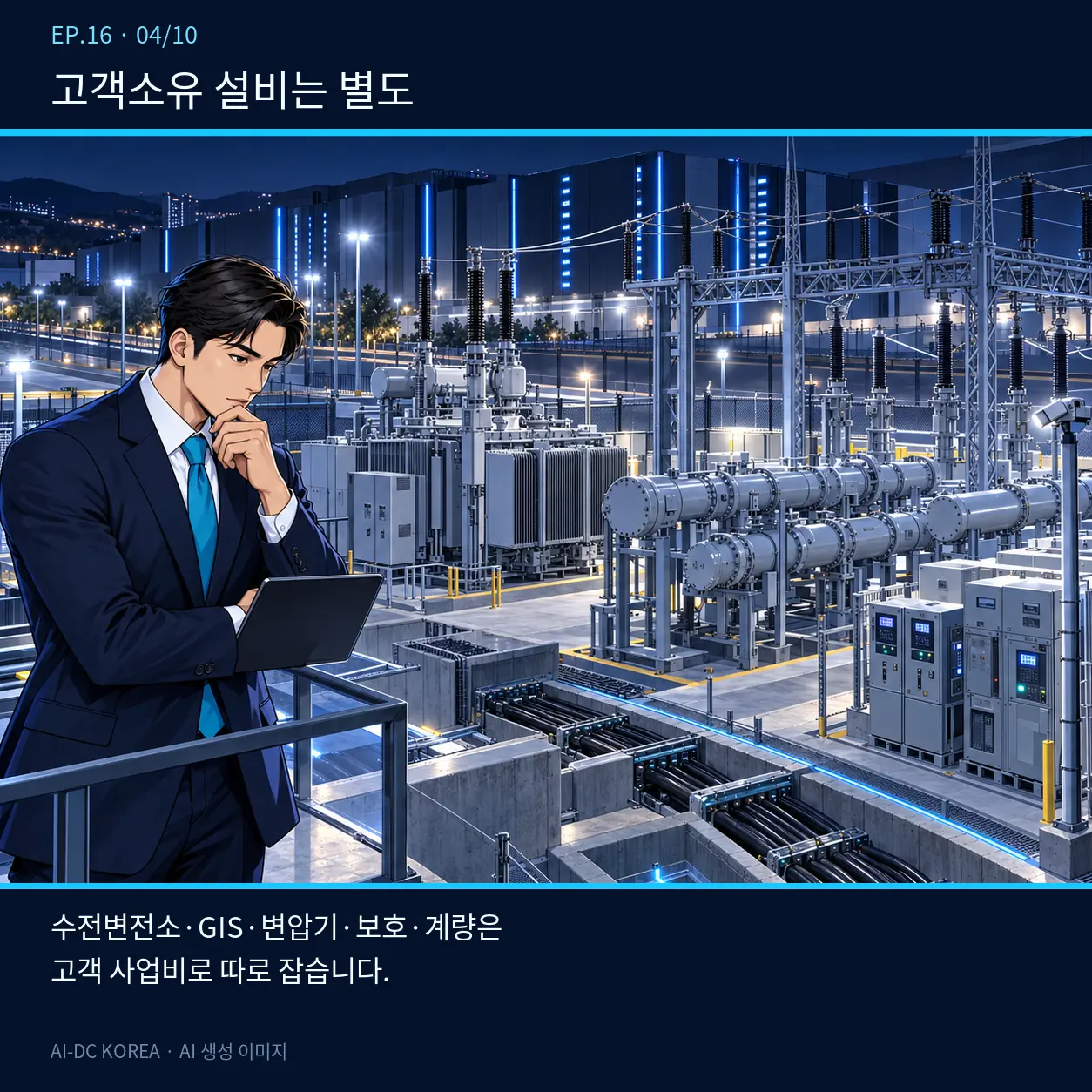
For customer-owned sections, the power receiving substation, GIS, transformers, protective relays, metering, control and communication systems, on-site cabling, and civil and architectural works are budgeted separately as customer project expenses. The total project cost must include not only manufacturing and installation costs but also testing, pre-service inspections, spare parts, operational handover, and maintenance costs.
Costs outside the transmission lines are also separated. Costs outside the transmission line must also be itemized separately. Responsibility for costs related to private land rights and compensation, road and waterway occupancy, excavation, traffic management, restoration, temporary work sites, and access roads may vary depending on the asset owner, project contractor, or permit holder. Linking these costs and payment terms to the land parcel-by-parcel rights registration ledger created in the previous chapter can help reduce omissions.
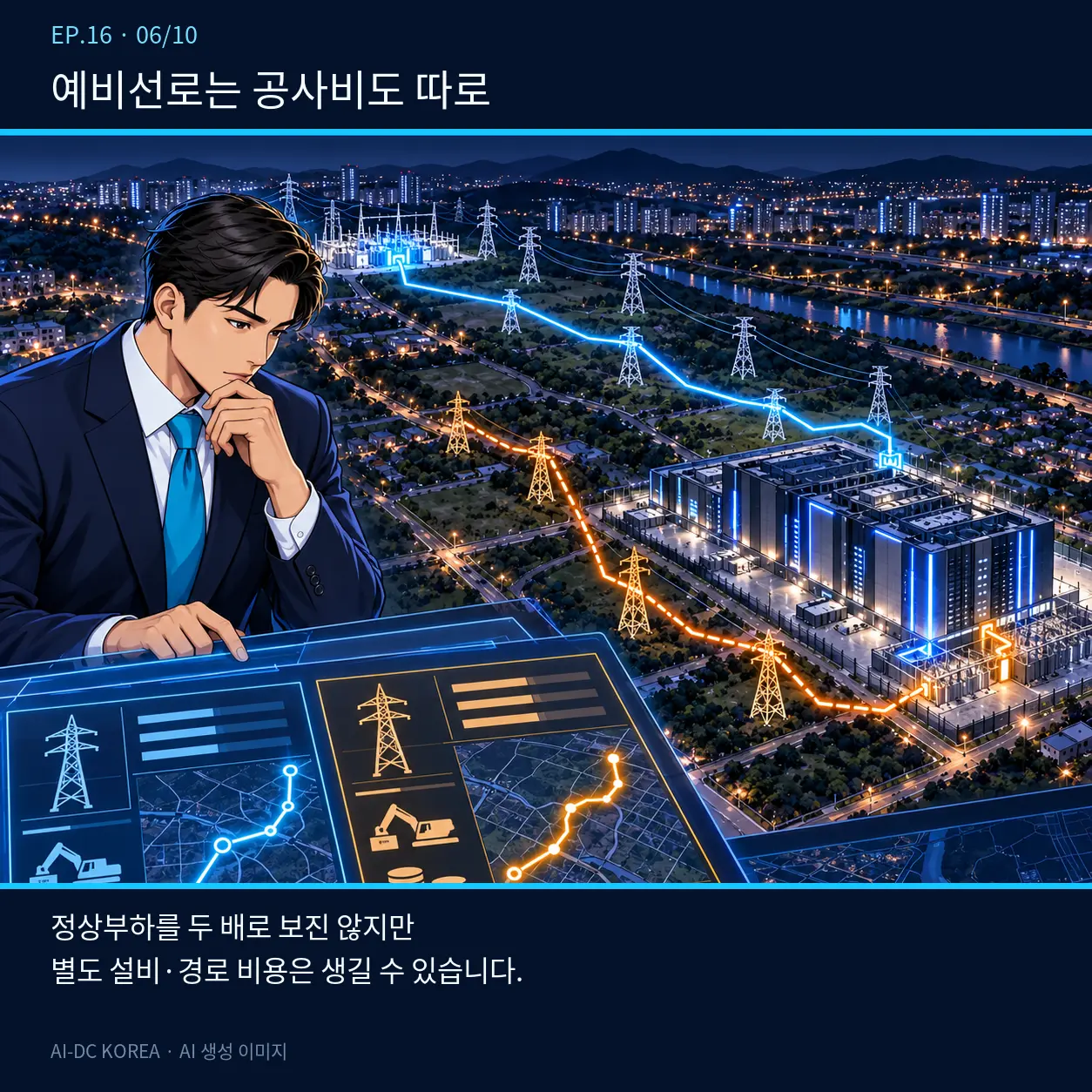
While a reserve circuit is not simply defined as double the normal operating load, if separate circuits, conduits, circuit breakers, protection devices, meters, or routes are required, additional equipment costs and facility charges may apply. After distinguishing between common grid reinforcement, KEPCO-owned dedicated facilities, and customer-owned service connections, the basis for calculation must be obtained for each.
The preliminary estimate provided in the initial response is not the final settlement amount. The design cost will vary depending on changes to the connection point, actual route, cable length and specifications, civil engineering methods, material unit prices, and public complaints or permit conditions. KEPCO’s share / Facility contribution fee / Customer’s direct construction costs / Land and permitting costs Manage your budget across four categories, and verify VAT, payment due dates, settlement terms, and conditions for refunds or additional charges.
Practical Conclusion: After verifying the supply/demand point, facility ownership, construction items, types of facility contribution fees, and payment/settlement conditions in KEPCO’s official cost breakdown and design calculation basis, you must then combine the customer’s construction contract and the budget for land and permits to determine the total project cost for the 154 kV service connection.
※ This content is intended for initial feasibility and budget review. Actual facility fees and the scope of construction may vary depending on the applicable terms of service, contracted power capacity, supply method, on-site design, and KEPCO’s official calculations; therefore, they must be finalized based on the latest terms and conditions and a written response.
Start site analysis, including the 154 kV service line →Korea Electric Power Corporation — Definitions of Terms in the Standard Supply Agreement ↗
National Center for Legal Information — Road Act, Article 61: Road Occupancy Permit ↗